Tuesday, December 6, 2011

History of Akihabara: Part 2

The opening to our four part series on Akihabara revealed the city as a vibrant market driven by individual interests. Pre-war vendors tossed their fruit for vacuum tubes when radios hit, and the resulting home electronic market paved the way for consumer electronics. After the economy hiccuped, these in turn faltered to be supplemented by DIY computers and all its geeky friends. Part 2 seeks to answer the question: How did we go from microchips to moe?

Morikawa Kaichiro is a researcher and lecturer at Japan’s top universities in the fields of design and architecture. He has published numerous works on otaku culture reflected through the lens of post modernism. Amongst these, his comprehensive look at the historic interplay between culture and personal space, Akihabara: The Birth of a Personapolis, was the inspiration for this series. 

We'll start off with Morikawa’s theories on the defining characteristics of otaku to help us better understand the connection between consumers of electronics and anime before exploring how the media falsified a negative image of the subculture and the resulting impact this had on society and Akihabara.

What Makes Otaku Tick

Typical trappings for a 1980's otaku. (Source)

Morikawa explains the otaku mentality in terms of space. More specifically, the manner in which they attempt to control the space around them. As mentioned in Part 1, the first generation of true otaku were cultivated in their bedrooms. They filled their shelves with figures and manga, lined their walls with posters and gravure idols. The point wasn’t to merely fill space, but to populate it with carefully selected symbols that represent their personal taste.

Collecting was augmented with internalization—memorizing dialogue, raising pet theories, creating dojinshi fan-zines, and other activities that exerted influence over the shows they loved. Because the otaku self-image is defined by personal taste, restructuring elements of a show to match one’s preferences entails control over the very building blocks of one’s existence. In a sense, they were mining the moe database long before Azuma Hiroki made it a buzzword.

Simply put, preference defines the self. To master the object of your preferences is to master the self.

This innate desire to dominate and control the object of their desires is the missing link between anime and PC otaku. In the same way that dojinshi allow the artist authority over a character by dominating them with codified moe elements customized to their individual taste, a PC user (emphasis on personal) has complete control over the space within a machine, so long as they master the code.

Programming code itself is English-based, the language of “superior,” invasive Western culture. Rather than shut themselves off from or rebel against this outside force, otaku in the 80's instead embraced it by reappropriating items that fit their needs while jettisoning the rest, effectively neutralizing the attackers while turning their own weapons against them. Just as Japan has maintained indigenous Shinto beliefs while integrating modified versions of Buddhism and Christianity, otaku accepted foreign computer culture, subjugating the code to spit out images of anime girls.

The mysterious heroine of Zarth is on the run and only YOU can protect her. (Source)

The otaku’s terrifying ability to alter their environment and bend culture to their will was at first limited to their personal living space—their bedrooms. However, computer and dojinshi stores soon diffused throughout Akihabara like spores from a fungal bloom, thriving in poorly lit buildings and creeping into abandoned spaces where the warmth of home electronics still lingered. Over time this growth would spread to cover the entire city, a relentless invasive species that choked out the original inhabitants.

The city itself has become an extension of the otaku bedroom, Morikawa argues. Think back for a moment and imagine what it feels like to be in Akihabara:

With the walls and skyline filled, bishojo adverts spill over onto the floor to envelop visitors on all sides. (Source)

From the moment you step off the train, its obvious that something is off-kilter. Adverts featuring anime girls decorate the station like wall scrolls. Heroines from the latest light novel series smile up at you coqquetishly from ground murals. And no sooner do you exit through the Electric Town gate that you are accosted by off-key J-Pop from Sakura Gumi or some other third-string idol group. You look around in an attempt to orientate yourself, only to be assaulted by a dizzying panorama of rainbow-haired debutantes with interchangeable features, their over-sized eyes following your every movement like titan sentries.

This disorienting experience is not unlike stumbling into the lair of a hardcore otaku, shelves lined with moe figures and walls plastered with their favorite 2D pin-up girls or 3D idols attempting to be 2D.

Wicked City Dojinshi

Take note that the shift from electronics to moe occurred organically. Everything resulted from fans who were in turn consumers of their own product. But don’t mistake this as a grass roots movement—it wasn’t a movement at all, merely persons acting independently towards the same unspoken goal like a spontaneous public-space project, a fan-made city.

There was no Akihabara Instrumentality Project, no corporate backers looking to capitalize on moe economics. No, that would come later, from opportunistic mass media vultures and the scheming Tokyo governor Ishihara.

Passionate as fans may be, exerting influence over real world space requires real world resources. Otaku goods were slowly gaining ground over home electronics out of economic necessity, but anime and computers had a built-in market cap. Things would eventually hit a wall unless they could find a way to reach out to a wider audience.

Otaku were a truly underground subculture throughout the 80’s, largely unknown by the public and ignored when noticed. This ambivalence was shattered by a sensational string of murder-kidnappings in 1989, where Saitama resident Miyazaki Tsutomu was given the death penalty for murdering and molesting the corpses of four young girls aged between four and seven.

Tsutomu's living space. (Source)

The resulting media circus exposed Miyazaki as a tape collecting maniac, beaming into homes across the country images of piles of unwatched VHS cassettes stacked precariously to the ceiling of his dingy apartment. Miyazaki became the public’s first face-to-face encounter with what the news branded “otaku,” and the grim details of his crime and private life were damning.

His obsession with young girls, his catalogue of anime and violent films, his shut-in personality—all these elements came together in a perfect storm of negative publicity to cement the de facto image of otaku as pedophile bottom feeders who never ventured into the light of day, with anime guilty by association.

In 2005 it was revealed that many of the pornographic and lolita materials “discovered” in Miyazaki’s home were actually planted there by television crews to stir up ratings. Some theorize that it was all a setup by the media to attack the VHS market that was eating into their profits. More dubbed tapes and OVAs means that much lower ratings for the boob tube.

Regardless of the political motives for his branding, the results were the same. Sex, violence, and the resulting corruption of Japan’s youth became flashpoint issues.

Experience the thrill of 177 firsthand on Niko Niko Douga.

Pornographic computer games, or ero-ge, were already a public secret at the time. Pixalated underage rape/marriage simulator 177 stood before the House of Representatives for indecency back in 1996, and while legislation did ban certain titles that caught the public’s ire, DIY PCs were too far under the radar to wave the gavel at. This all changed in 1991 when a Kyoto middle school student was caught red-handed in his attempt to shoplift the ero-ge Saori: House of Beautiful Girls.

Box art for Saori. (Source)

The boy should have gotten off with a slap on the wrist and a father chaperoned trip to a soap land to set him straight. Instead, the incident made headlines for the game’s salacious content—not the uncensored naughty bits, for those were somewhat standard (and illegal, though ignored) at the time—but for the extreme scenario where a young girl is kidnapped and held against her will in a mansion where she experiences titillating visions of incest and scandalous teacher-student relations.

Parents screamed for blood, driving a squad of pitchfork and torch-wielding police to search the home of the president of Fairy Tale, the game’s publisher, where he was arrested under charges for the distribution of indecent materials. The Ethics Organization of Computer Software, or EOCS, a sort of ESRB for PC games, was established the following year to ensure that the monster stayed dead.

With the first shot fired, politicians wasted no time in declaring open season on ero-ge. The Prefectural Ordinance of Juvenile Protection was revised to include computer games under the umbrella of “Harmful Books” (有害図書), the same classification that attempted to blackball Nagai Go and Tezuka back in the 70’s for their “shocking” sexual imagery. This was another in a long line of scandals that funneled power of expression from creators to bureaucrats and PTAs. In this sense it could be argued that the Miyazaki incident helped set the stage for the recently passed Tokyo Manga Ban—where would Ishihara’s soapbox have been if the public hadn’t been preened to loathe otaku?

On the Coattails of the Apocalypse

With the world turned against them, their only hope for salvation was from the community itself. One of the kings of otaku, director Anno Hideaki, was about to provide us with a martyr to die for the sins of anime, changing the way the world consumed and viewed nerd culture in the process.

Anno’s Neon Genesis Evangelion first aired from October 1995 to March 1996. It was one of the last adult-oriented anime broadcast in a prime time slot, though following the precedent set by classic titles such as Space Battleship Yamato and Mobile Suit Gundam, Eva wouldn’t hit its stride until midnight rebroadcasts. In fact, its abnormally high ratings were so impressive as to help create the current (and much maligned) model of late night anime.

Riding a wave of miasma released from the popped economic bubble and competing for ratings with ongoing coverage of the Aum Shinrikyo cult who perpetrated the Sarin gas attacks on the Tokyo subway earlier that year, Eva synchronized with the nihilistic zeitgeist and wormed it’s way into the hearts of a generation who, for the first time since the war, were uncertain about the future of their country.

A lack of communication in the so-called communication age, the coming Apocalypse made real, a potent cocktail of underage sex and wanton violence, totally sweet giant robots thrashing to classical music—whatever message was to be found in Eva, it resonated with the populace, and converted true believers into otaku neophytes.

The rebroadcast of Eva caused a literal Second Impact for otaku culture. Suddenly, media that had no business discussing anime was dedicating serious coverage to Evangelion. Gelget Shocking Center became the first of many radio programs to invite voice actors and producers into the studio to banter about the show.


Should the video go down, try searching for "ゲルゲットショッキングセンター" on Youtube.

Shinji became the cover boy for Studio Voice, a pop culture mag dedicated to the cutting edge of cool. Even the high class cinema journal Kinema Junpo wasn’t above providing critical discourse on the End of Evangelion films.

When a dark horse property pulls in big bucks, people sit up and notice. Eva netted an estimated 30 billion yen, making it more than just a successful show. It was a cultural phenomenon whose resulting economic and cultural capital legitimized anime as a business and art form. For the time being, otaku had turned the tables, like the bullied kid in school who goes on to lord over his former tormentors as a successful CEO.

Despite its explosive success, Eva turned out to be a false prophet. While it made gobs of money and helped improve the public image of the otaku hobby, it wasn’t indicative of anime as a whole. Just because someone thought Rei was “totally hot for a cartoon chick” didn’t mean they were ready to leap head first into the moe quagmire that covered the medium.

And so the Eva bubble soon burst, taking the wind out of the anime industry’s sails along with any lingering hope of prime time broadcasts for original properties. This didn’t deter Akihabara. Its coffers were filled from the burgeoning character goods market, giving them a monopoly over the storefronts. The modern image of the city as an otaku holy land was taking form. “Moe” was gaining ground as a buzz word. All it needed now was a mascot, who we will introduce in the next installment.

Thursday, November 24, 2011

History of Akihabara: Part 1

Akihabara has grown into something larger than itself. Obscured in the modern myth of "Cool Japan," we've lost sight of its raw essence.


We can only see the city for its nerd culture and new technology. In truth, for the past hundred years the area has been driven by bold entrepreneurs sensitive to evolving market trends, with otaku goods being only the most recent in a long line of services. In this series I hope to provide a fresh perspective to bring the hype more in line with the actuality, and a renewed appreciation for Akihabara along with it.

Over the next 4 posts, we will delve into the history of Akihabara to discover the circumstances that enabled it to evolve from black market to electronic town, and from otaku Mecca to media cash cow and beyond. A majority of the information comes from Akiba Confidential and Learning from Akihabara: The Birth of a Personapolis, as well as personal research and observations made while living in central Tokyo.

In Part 1 we’ll look into the first developments of the area before it was even known as “Akihabara,” as well as set up the key pieces for the mid-90’s anime boom to later knock down in Part 2.

Humble Beginnings

The first important thing Akihabara did was burn down.

In 1869, a blaze tore through the land between Kanda and Ueno, reducing the settlements to a smoldering heap while creating a welcome windfall for the newly established Meiji government. Edo, rechristened as Tokyo the previous year, remained a densely populated tinderbox just waiting for stray sparks, arson, or hungry flames from neighboring districts to spread uncontrollably throughout the city. The bean counters decreed it more prudent to use the now barren area as a fire-proof doorstep than gamble with their resources in rebuilding a region that could literally backfire on them.

It wouldn’t stay a wasteland for long. The following year, the government erected a small Shinto shrine named Chinka-Sha, or “The Extinguisher Shine,” on the site of old Edo Castle as a ward against potential flames. Apparently this decree never made its way to the town folk, for citizens mistakenly assumed that the structure enshrined Akiba, a renowned fire-quelling deity. This misconception became fact as the land around the site picked up the nickname Akiba no Hara, or “The Land of Akiba.”

The modern history of Akihabara begins with it as Tokyo’s doormat, but fortunes would soon reverse. The area’s location on the Kanda River connected it to Tokyo Bay, making it a prime trading zone for international cargo. In 1890 the area was connected to Ueno via the Tohoku Main Line, which then further extended to Tokyo in 1925, opening the freight-exclusive station to public transport for the first time to drum up tourism as part of rebuilding projects following 1923's Great Kanto Earthqauke.


Akihabara Station in 1925. (Source)

Somewhere along the way, a careless typo changed the neighborhood’s name from Akibahara (あきばはら) to Akihabara (あきはば ら)—a totally reasonable misreading of the original misnomer considering that the readings of Kanji for proper nouns are as arbitrary as the local dialects that muddle them.

Wholesale market before the war. (Source)

Distributors, wholesalers, you name it—everyone canny enough to swindle extra scratch descended upon the area which, by 1935, was officially designated as a fruit and vegetable market. Meanwhile, lumber merchants and shippers began settling down in tenements along the river. The infrastructure brought in people and capital. The technology brought in the first otaku in the form of obsessive train enthusiasts.


Inside of freight shipping station circa 1945 (Source)

Electric railways were on the cutting edge, and with its myriad of major and minor stations, the Kanda ward served as the beating heart that all steel arteries ran from. Tetsudo Otoko, or Train Men as they would eventually come to be disregarded as, found solidarity when the Tokyo Transport Museum opened to great fanfare in 1936. With train mania at its zenith, none could have guessed that there were already proto-otaku among them, tilling the soil for the eventual seeds of moe as we’ll discuss in future installments.


In 1936, the Transportation Museum was relocated from around Tokyo Station to a building refurbished after the Great Kanto Earthquake inside the recently defunct Manseibashi Station along the Kanda River. The exhibitions were again moved in 2007 to Saitama as the Railway Museum.

The Influence of International Conflict and Domestic Price Wars

The market shifted from vegetables to vacuum tubes the following year after the Sino-Japanese War broke out, diverting the country’s appetite from wholesale produce to wireless communication for military purposes. In the early 40s, bulk electronic parts became the product du jour and started to muscle the fruit stands out of business. Akihabara, a city-wide swap meet of raw electronic ingredients, kept the high-tech war machine fed. This taste for radios would last far after Japan’s defeat at the hands of Allied forces.

Following World War II, the country was decimated, ashamed, and impoverished. But life goes on, especially for those crafty enough to game the system. To a starving populace, rice was a precious commodity worth more than life itself. Even so, it was outclassed by the radio. Engineering students from the nearby Tokyo Denki Univeristy would saddle up their rucksacks and scour the markets for the best deals. If the going rate for a vacuum tube was 4 pounds (1 sho, or 1.8 liters), then a completed radio could go for as much as forty pounds! Not too shabby for a starving college student amongst an already starving population.

Luxury taxes in addition to a prohibitively expensive price point helped DIY radio culture flourish. (Source)

The black market gravy train wouldn’t go on for long. MacArthur and his boys at the GHQ brought down their boot heels on unregulated trade by outlawing open air vendors in 1949. Ostensibly, it was part of a larger infrastructure reform project to widen roads and regulate commerce. Pragmatically, it stripped the citizens of their right to assembly in a power play to stomp out any embers of Communism before they developed into an anti-American blaze.

Stall owners wouldn’t take this lying down. The Vendors Union lobbied the government, and the municipality of Tokyo and Japanese National Railways responded by providing merchants alternative land on Akihabara station grounds. Merchants skirted the ordinance by pooling their resources into building brick and mortar stores. Sato Musen, Ishimaru Denki and other major players started here, standing strong as huge conglomerates in comparison to the fly by night vendor stalls.

The seven story Radio Kaikan, or Radio Hall, would become the most successful and iconic of these. Completed in 1962, tracing trends through the stores it housed over the years reveals the history of the city like layers of sediment. For now, it dealt exclusively in electronics, though it would later serve as a barometer for the encroaching popularity of otaku goods.


Radio Kaikan as it opened for business in 1962. (Source)

These electronic retailers were now organized and ready to capitalize on the post-war economic miracle. Through the 60, radios, along with white goods such as washing machines and fridges, formed the holy trinity of home electronics. The public ironically referred to these products as Mikusa no Kamudakara, or the Three Sacred Treasures, a title normally reserved for the sword, pearl, and mirror from Shinto myth that serve as symbols for the emperor. These goods revolutionized people’s lives, only to further evolve in the next trifecta of color TVs, freezers, and stereos.


"Ishimaru Denki IS Akihabara"

The hope placed in electronics perfectly encapsulated people’s bright outlook for the future. This worship of electronics and technology empowered the current generation, only to gut the next. The dazzling future promised by the Space Age literally ran out of fuel throughout the duel oil shocks of the 70’s, allowing the vapid consumer reality of present environmental and social problems to overtake it.

Children who grew up with the lunar landing and Ultraman’s kaiju-busting Science Patrol were finding out the hard way that the final frontier was closer than they thought—Most likely behind a stifling office desk.

Their dreams dashed, youth were struck with a sense of loss and betrayal akin to the war-torn nation receiving the news that their Emperor was not, as they had been taught their entire lives, descended from the Gods. Post-war Japan was able to compensate for this loss by focusing on rebuilding the country and reaping the material spoils of industry. Children of the 70’s didn’t have this luxury—or rather, they had too much luxury.

Pampered and proud, father’s salary allowed them their own private bedrooms and the disposable income to fill this space with toys, games, and gadgets. True, the economic miracle had transformed Japan from purgatory to paradise in three short decades. But this financial freedom also allowed for extreme self-indulgence, and with it, the first generation of true otaku.

Fold up this notion and stick it in your pocket for later. As far as every one’s concerned at the moment, electronics could do no wrong.

Akihabara’s electronic market had accumulated enough momentum that even the dual oil shocks were mere bumps along the road toward total dominance. The true threat would come from domestic, not international factors. Businesses had forgotten a key component in their strategy to monopolize the home and consumer markets: Parking lots.

Yamada Denki, Sakuraya, Bic Camera, and other chain stores began cropping up in the suburbs, offering lower prices and a more family-friendly shopping experience. Papa would be allowed to drive his shiny new car and play head of the household for a day. Bargain-hunting Mama was always happy to pinch pennies even as salaries soared. As these sensible purchasing patterns diverted sales from the city to the suburbs, it created a consumer vacuum in Akihabara waiting to be filled.

From Family-Friendly to Otaku Paradise

My-Com map published by Sharp in October 1982 as part of their advertising campaign for the MZ-2000 (Source)

DIY computers, or My-Com, used this moment of weakness to get their foot in the door. In 1976, one year before Apple launched, NEC Bit Inn opened on the 7th floor of the Radio Kaikan where it served as the front-runner for the coming PC revolution. Major players like Sato Musen began carrying computer parts in 1982, and the subsequent emergence of games featuring lo-fi anime art drew a new breed of nerd into the fold.

The demographic was steadily shifting from families with children to young males toting backpacks, not unlike the previous generation of radio scavengers. Slowly but surely PC stores trickled down from the top floor of the Radio Hall, pushing electronic shops out the door. LaOX the Computer Kan launched in 1990 as a seven-story behemoth housing computers, consumer electronics, and cell phones.

Plaque that was once displayed at the historic site of NEC Bit-INN (Source)
By 1994, PC sales overtook home electronics, and the hotly anticipated midnight launch of Windows 95—a cultural event as much as a consumer one—hammered the final nail in the coffin of old Akiba.

Stage 1 of Akihabara’s transformation into the otaku holy land was complete. Granted, while hardcore PC users had strong otaku tendencies, not all otaku were into PCs. If the city was to increase its nerd population, it would have to lower its barriers of entry through goods with a high market penetration that also maintained enough fringe elements to nurture a robust subculture.

As it turns out, this was the one natural resource that Japan was wealthy in. Video games and manga provided the perfect building blocks to bridge the gap between micro processors and moe.

In 1994, an employee of the computer mega store Sofmap opened Tora no Ana, a used dojinshi shop out of a shoebox apartment, unaware that he was setting up a chain of events that would permanently warp the cityscape.

Japan experienced an anime revival of sorts between 1995 and 1997 with hits such as Neon Genesis Evangelion, Sakura Taisen, and Sailor Moon, creating demand for ancillary products that pushed this tiny shop to branch out into character goods, thus solidifying otaku paraphernalia as a viable market. Seemingly overnight, Tora no Ana went from a hole in the wall dojinshi bodega to a nationwide chain that currently commands twin seven floor flagship stores in the heart of Akihabara.

A certain otaku magnetism was drawing nerd culture to the city. Dojinshi compatriot K-Books expanded from their niche in Ikebukuro to help fill a growing demand. Osaka-based figure maker Kaiyodo had branched out to Shibuya and Kichijoji with varying levels of success, but also found themselves pulled to the neon capital in the east. Both would go on to setup shop in the Radio Hall during the late 90’s, pushing the last vestiges of electronic shops out the door.

The rout of home electronics was a long time coming and surprised no-one, but it begged the question: Why otaku? To understand how Akihabara went from being merely socially awkward to flying totally off the social radar, we need to explore the controlling nature of otaku, as well as the profound effect Evangelion had on the population.

Thursday, November 17, 2011

Creamy Mami x Galaxxxy

When I set out to visit the shop, I got halfway to the station before realizing I forgot the box of Oreos I planned to eat on the train and went back home to grab them. Unfortunately I didn't notice that I'd also forgotten my camera, so you'll have to make due with cell phone photos this time around.

Shibuya clothing brand Galaxxxy is running a Creamy Mami shop/gallery through the end of November. Lots of concept sketches, animation cells and vintage collectables are on display, along with original goods ranging from jackets to keyboards. Details here


Tuesday, October 11, 2011

Umezu Carnival 2011

If it feels like there hasn’t been much Umezu Kazuo news lately, it’s because the mad manga-ka has cloistered himself in his recording lab over the past year making the final modifications to his latest musical experiment, Yami no Album 2, a sequel to the original 1975 oddity.


This year’s Umezu Carnival capped off the Kichijoji Animation Wonderland and served as a testing ground for his latest creation. Normally the annual talk show and concert are held separately, but Kazz’s band didn’t have time to prep for the new material, leaving him free to hog the spotlight and rock it karaoke-style.

UMEZZ  carnival 2011

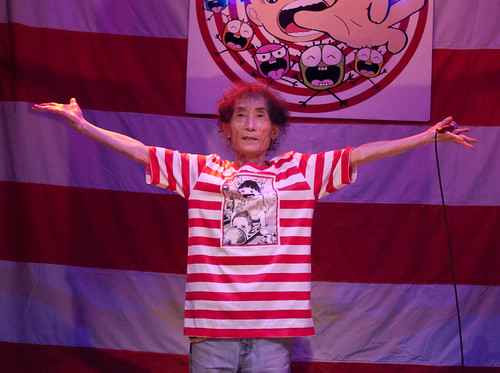
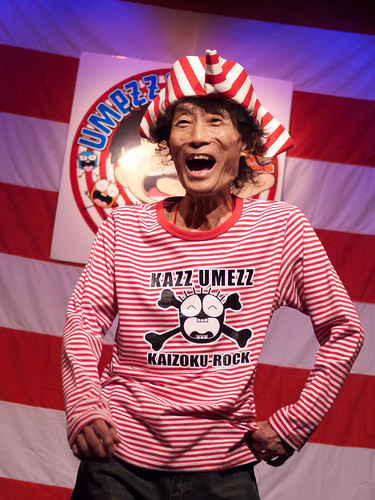
The focus here isn't Kazz's grand entrance, but rather his shirt featuring Makoto-Chan using his sister Mika as a human toilet. That pretty much set the mood for the rest of the night.

UMEZZ  carnival 2011

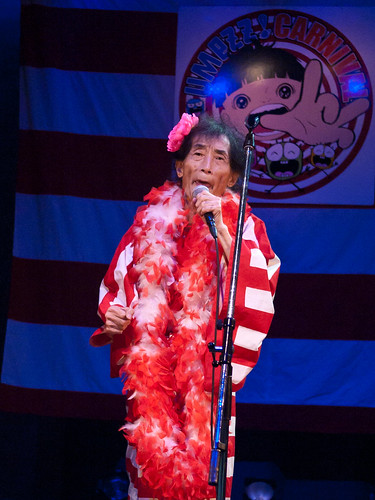
Kazz serenades the crowd with Shinjuku Crows, his throwback to wandering pub minstrels from the early post-war days. Obviously he's playing the femme fatale.

UMEZZ  carnival 2011

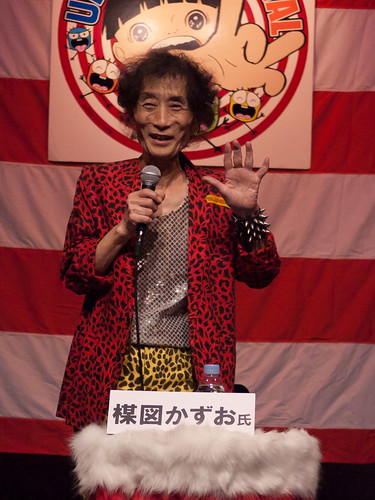
It's not ironic if it's authentic! Rocker Kazz dusted the mothballs of his 70's digs to prove that he's had this prima donna thing down cold before most of the audience was even born.

UMEZZ  carnival 2011

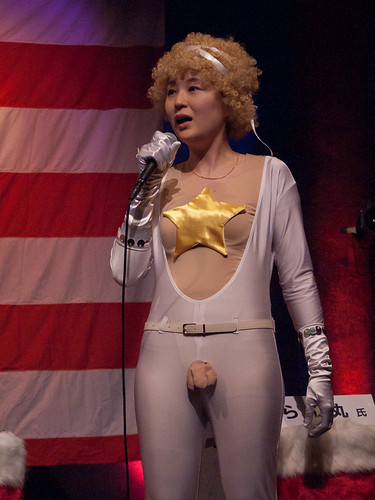
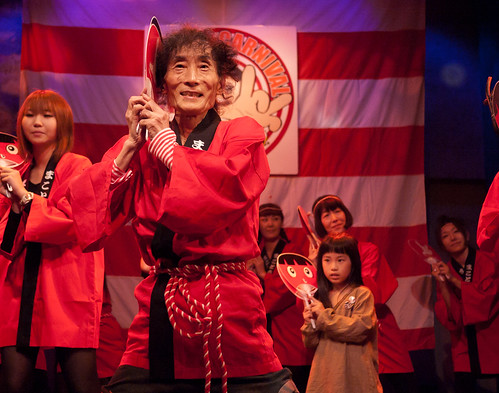
For the talk show portion, Demerin played Ran-Maru, the geriatric rock star from Makoto-Chan who hides his potbelly, male pattern baldness, and erectile dysfunction with prosthetics. He's the most family-friendly character in the series, all things considered.

UMEZZ  carnival 2011

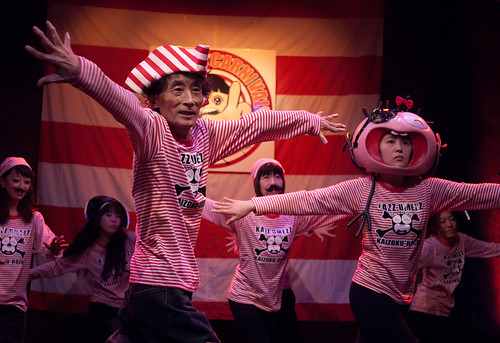
Kazz has always dreamed of becoming a pirate. Not because of the high-sailing adventure (he gets seasick), but because of the red-white stripe uniform! Though he admits that his Peter Pan complex might have something to do with it as well.

UMEZZ  carnival 2011

The lovely mustached crew of the Gwashi Dancers try out their sea legs as they perform Pirate Rock, the hot new cut from Yami no Album 2.

UMEZZ  carnival 2011

Momo-Chan, the little girl up front, memorized the choreography through repeat viewings of the DVDs and was rewarded with a spot as an honorary Gwash Dancer. Things are looking up for the future of the Umezu empire.

UMEZZ  carnival 2011

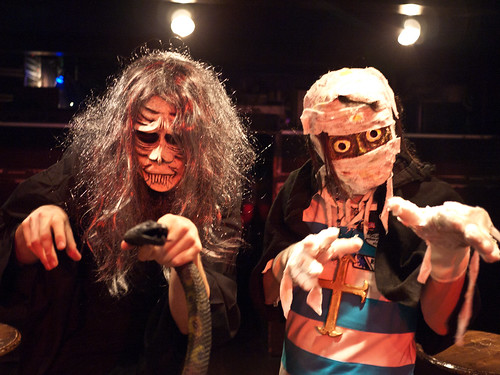
Though it's probably a good idea to leave the kids at home with perverts like this running loose. Voidmare (left) is in his award-winning white haired witch costume while Gokicchi (right) is looking to administer a savage tickling as Miira Sensei, or the Mummy Teacher.

Find out more about the Nakayoshi reprints here.

Between the release of his first new album in over three decades and a focus on reprints of rare, early Shojo material, 2011 has been a throwback year for Kazz. If everything goes according to plan, next year he'll have the band back together with new arrangements, new antics, and new ways to gross us out!

Tuesday, August 23, 2011

Children Who Chase Lost Voices from Deep Below: Shinkai Is Not Miyazaki

I’m here to talk about how Shinkai Makoto is derivative. Just not in the way that everyone thinks he is.

The obvious criticism levied against him is that he borrows too heavily from Miyazaki. Which in his latest film, Children Who Chase Lost Voices from Deep Below, is somewhat true, but also short sighted. For Miyazaki himself is not innocent of drawing a bit too deeply from the wellspring of our collected aesthetic consciousness.

Like any other ambitious animator, Miyazaki started as a lowly grunt and worked his way up from thankless in-betweens, to key frame animation, character designer, and beyond. Along the way his aesthetic sense would be massaged by the senior staff and house style of the studio.


Ganba's Adventure (1975)

Nishimura Takayo, character designer and 2D animation director for Children, trained under Kabashima Yoshio, a contemporary of Miyazaki during his time at Toei Animation. Through the 70’s both men would be influenced by World Masterpiece Theater series, which adapted classic tales as family-oriented anime. Kobashima countered what he felt were stale retreads with original stories such as Ganba’s Adventure; Miyazaki would work on the Japanese retelling of Anne of Greene Gables before leaving Nippon Animation.


Anne of Green Gables (1979)


Shinkai has stated that the style of Children aims to emulate World Masterpiece Theater (fitting, given the 70’s setting), meaning that if the results look like Miyazaki, it’s because they’re drawing from the same inspirations. The same talent pool, as well. Many of the artists on the film, including background matte painters, have a history with Studio Ghibli. When you’re enlisting the same cooks with the same ingredients, it's inevitable that tastes blend. It all boils down to how your house tweaks the recipe.

Miyazaki built his career on parables of man vs. nature, progress vs. tradition, haves vs. have-nots. In contrast to this bevy of social messages, Shinkai comes off as introverted to the point of self-centeredness. Shinkai is primarily concerned with the distance between people, either the physical or mental, and the drama created in closing that gap. At the end of the day he doesn’t care if you’re a proletariat or bourgeoisie, so long as you’ve learned to love yourself.

Magical gemstones, luddite nostalgism, a young girl protagonist thrown out of her element in a fantastic world—All tropes Miyazaki has claimed a monopoly over out of repetition. Let’s be realistic—Even Miyazaki is aping his own style by this point.

Still, Shinkai declares his love for Laputa, perhaps a bit too loudly. But this is to overcompensate for his first nerd-crush that inspired him to join the industry: The PC-88 intro to Falcom’s action RPG, Y’s II.


Y's II Eternal (2001)


Here we see overlapping themes—Girl meets boy from another world, high fantasy and flying islands, mystical necklaces. Years later Shinkai would be given the opportunity to create the cinematics for the Windows remake where we see his lo-fi upbringing pushed to its artistic limits.

Speaking of borrowing from what you love, steampunk didn’t exactly originate in Japan, and girls were adventuring in Wonderland long before Chihiro. If you want to say that Shinkai’s films sprouted from Miyazaki’s, I’ll give you that. But you have to realize that Miyazaki’s world is firmly rooted in the works of another, the manga artist Morohoshi Daijiro.

Morohoshi Daijiro's Yokai Hunter (1974)

Without any titles available on English, Morohoshi’s presence may not be obvious to western audiences. Following his 1970 debut in COM he quickly became the poster boy for manga connoisseurs, lauded by critics but only mildly successful in commercial magazines. Miyazaki is on record stating that Morohoshi's detailed yet lumpy line work inspired the sketchy penciling in the Nausicca manga. Dig deeper into Morohoshi’s themes and it becomes apparent that the director cribbed more than just his style.


Morohoshi Daijiro's Mud Men (1979)

Mud Men, based around creation myths of the eponymous tribe from Papa New Guinea and what happens when greedy outsiders anger the indigenous forest spirits, plays out like a gender-flopped version of Princess Mononoke.

Morohoshi is famous for weaving folklore into the every day, another technique unfairly attributed as a Miyazaki-ism. This influence is clearly present in Children as well. With Agartha, Shinkai attempts to tie world mythology together with a common thread that runs through underworld legends, while at the same time verifying them through the pseudo-science hollow earth theory.

At an earlier point down the same narrative vector, we have Morohoshi’s Dark Legend of Confucius, which connects the Brahmins of India, five element theory of China, and the historic first peoples of Japan through Ying-Yang dualism as a universal binary code that can be deciphered by analyzing the Analects of, you guessed it—Confucius.

Miyazaki builds new worlds of high fantasy from low technology. Shinkai and Morohoshi build upon existing worlds with high theological concepts.

I can't find my copy of Dark Legend to scan, so here's a clay model of the Jomon guardian spirit. (Source)

There’s also the striking visuals of Agartha. The terracotta structures populating the underground world are adorned with organic line work reminiscent of motifs from Japan’s pre-historic Jomon period. Once again, Morohoshi beat him to the punch by several decades with Ankoku Shinwa, or Dark Legend (no relation to Confucius this time), where Haniwa sculptures with Jomon patterns serve as the key to opening the forbidden lands underneath Kofun burial mounds. Not a glowing gemstone per se, though still a McGuffin cut from the same bedrock. 


Nightgaunt by Rob Thomas

Traveling through an underground gate with a mythical key to usurp forbidden knowledge from the center of creation, all the while being pursued by faceless demons once the sun sets—Suddenly, Children sounds less like Laputa and more like Lovecraft’s The Dream Quest of Unknown Kadath. Just swap in Randolph Carter, the silver key, Nightgaunts, and the Plateau of Leng! You've already got the guardian cats and moon barges.


You can draw an unbroken line of influence from Shinkai to Miyazaki to Morohoshi to Lovecraft, and continue it onward to Lord Dunsany’s dream fiction and beyond should you be ambitious enough. 

My point—I don’t want to see Miyazaki become to anime what Tezuka is to manga: Omnipresent, over quoted, and unchallenged. Both artists are geniuses, but their image has grown to such titanic proportions that we overlook the giants whose shoulders they stand on.

If you want to criticize Children for being derivative, you should, because it is, but please keep in mind that the source material is also derivative in its own ways. The film has more pressing issues, such as the motiveless protagonist, visually striking though otherwise unmotivated journey across Agartha, and ending theme that is horrifically sincere in a way that only singer-songwriters can manage.

Despite some whiffs in the characterization and pacing, Children is still worth seeing, if just to track the growth of one of anime’s most interesting talents. Just leave your Ghibli bias at the door, as counter-intuitive it may feel at first.

Monday, August 15, 2011

Comiket 80: Through the Looking Glass

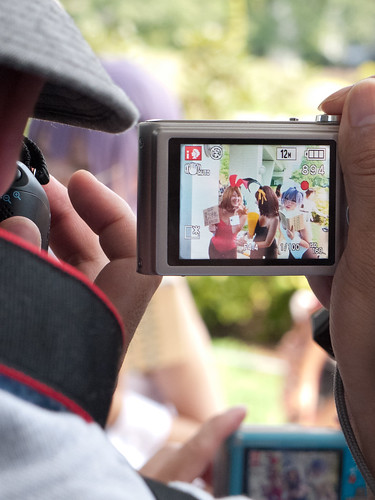
Imagine: You are the mighty hunter, gear slung heavy over your shoulder like a gizmotic eye of god. Clammy hands dripping with sweat, nose burning from the fetid press of a thousand unwashed maniacs baking in the sun.


But none of that fazes in you. In this moment, all that exists is you and your quarry. Everything else is a distraction.

Squinting through the viewfinder, your doe-eyed target wanders into the crosshairs.

You take a deep breath. Hold it, gingerly squeeze the trigger.


And…

BOOM! Panty shot!

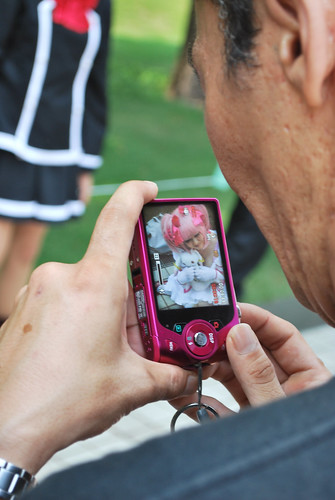
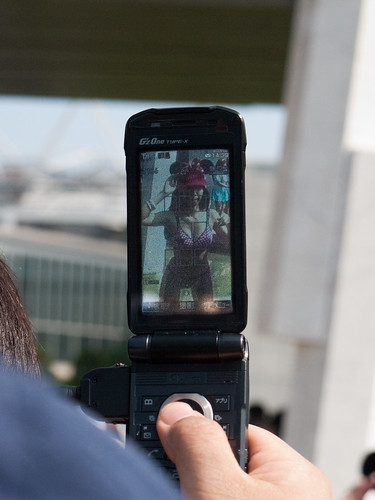
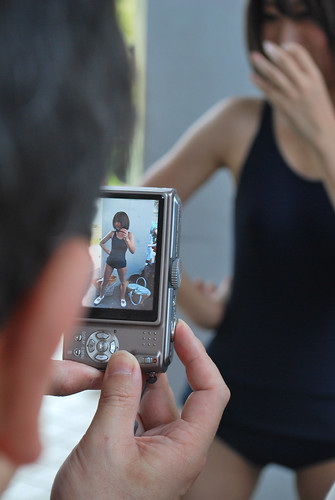
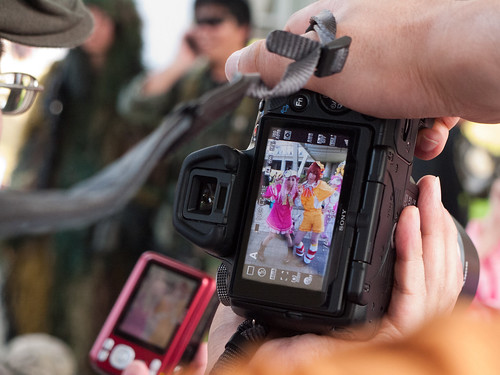
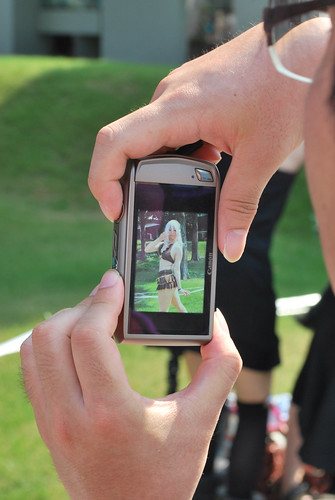
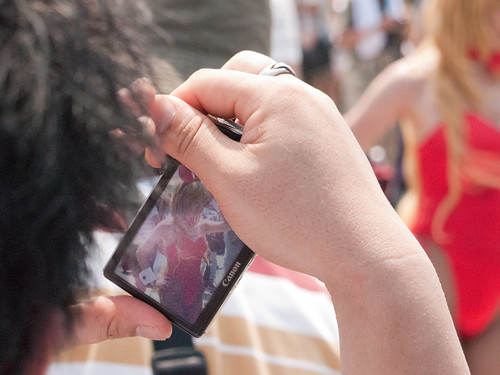
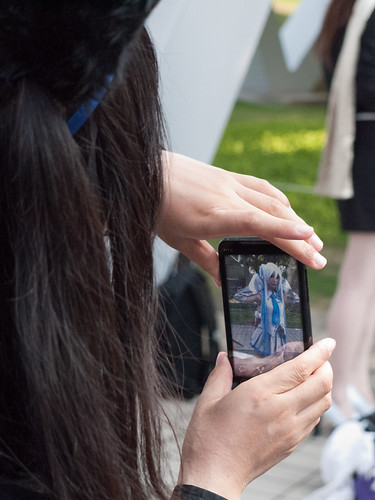
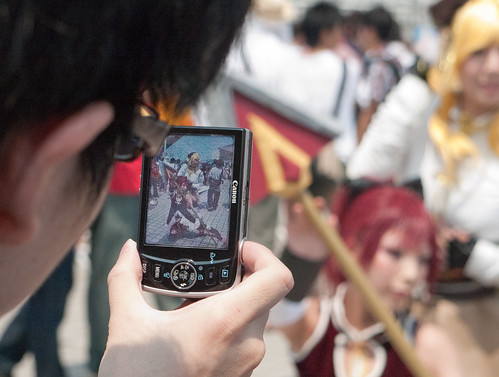
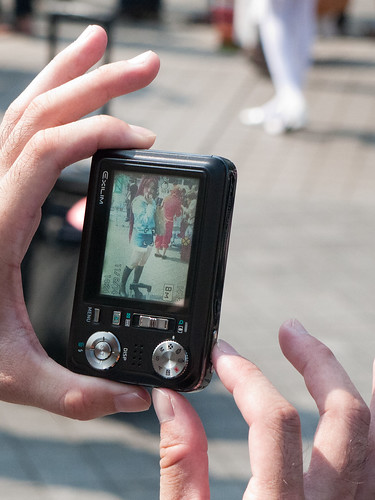
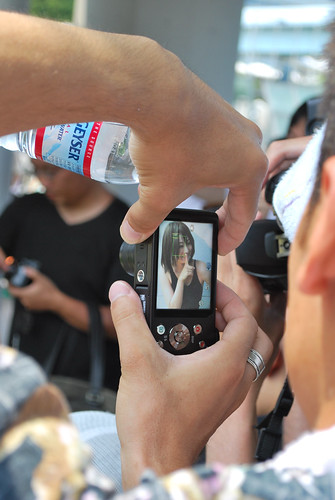
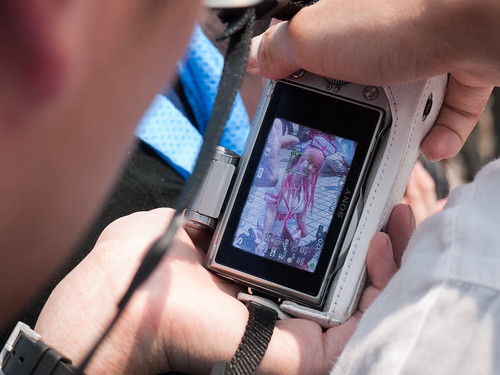
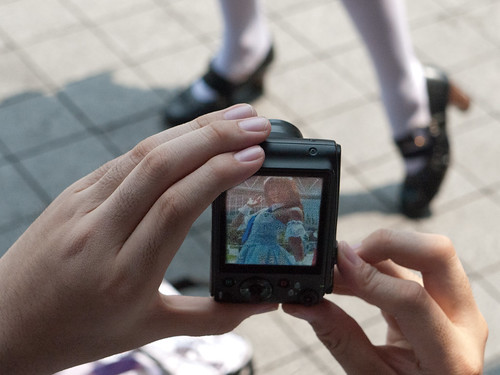
Tokyo Scum Brigade brings you the world’s very first otaku third person shooter. Living vicariously through sexy cosplay photos on other sites lacks verisimilitude! Now YOU can be the guy taking the pictures that everyone else oogles over. Our augmented version of an already virtual reality brings you within breathing distance of the true Comiket experience.

Take the plunge and discover what otaku have known for years—3D girls are best enjoyed through a 2D screen.

day 3 (1 of 1)-24

day 3 (4 of 9)

day 3 (1 of 1)-19

day 3 (1 of 1)-13

day 3 (1 of 1)-16

day 3 (1 of 5)-4

day 3 (9 of 9)

day 3 (1 of 1)-8

day 3 (1 of 1)-10

day 3 (1 of 1)-25

day 3 (5 of 5)-3

day 3 (1 of 1)-5

day 3 (2 of 5)-2

More photos on our Flickr