Even Godless heathens can get into the giving spirit this holiday season. We at TSB mustered up the last lingering traces of compassion from our coal-stoked hearts to visit akiba:F, a Red Cross blood donation center located in the otherwise morally bankrupt center of cloying consumerism, Akihabara.
We rolled up our sleeves, ready to make our first positive contribution to the country even as our minds raced with uncertainty. Assuming that our precious bodily fluids met Japan's regimented standards, could the nurse navigate her needle through the thick underbrush of our barbarian forearm hair? What if the recipient turned out to be a hard-line right-winger that chose death over race contamination? And would our fat gaijin hemoglobin fit through IVs intended for skinny Japanese blood cells?
Such concerns are, in fact, behind the times. The facilities and philosophy driving them are ultra-modern, if not Apple-futuristic, wrapped in warmly curving white plastic backlit by soft neons. It took until 2012, but we finally have a functional model of the spaceport from 2001.
After signing in at the reception desk, we were led to ergonomically-designed Martini glass seats and asked to read comics until it was our turn. With baskets of snacks and an open drink dispenser, the room felt like a manga cafe on the U.S.S. Enterprise. Tea. Earl Gray. Hot. An issue of AKIRA open on my lap to kill time. Factor in vacuum-tube display cases housing figures and merch—currently a tie-in with the new Evangelion film—and it's easy to see why the center would be packed, even on a Saturday night. Otaku space has expanded into outer space, or a reasonable facsimile thereof.
The actual interview and needling process are strictly by the book and hardly worth mentioning—unless you were alive in Europe during the 80's, in which case you'll be turned away as a potential carrier of mad cow disease. Apparently infection is undetectable. Japanese ability is also a plus, if only so you don't accidentally sign-in as a needle-sharing junkie carrying Hepatitis B.
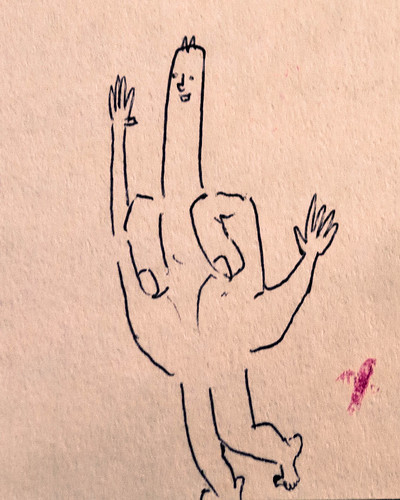
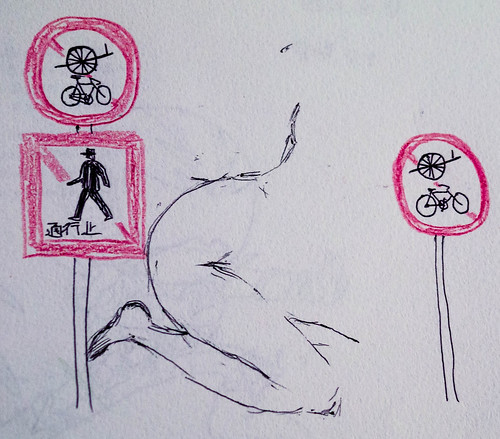
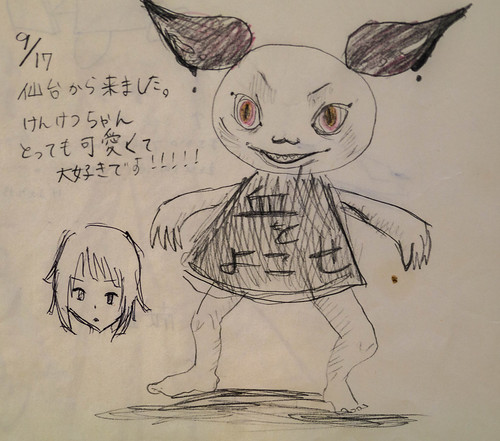
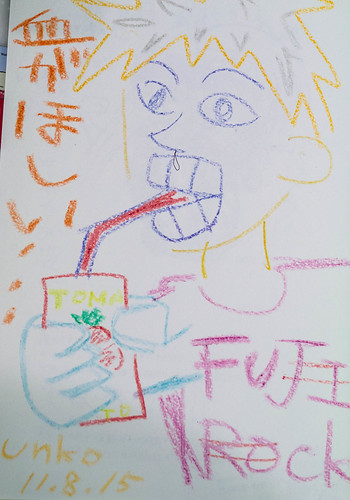
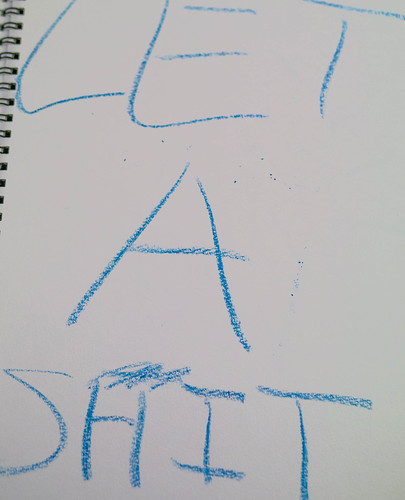
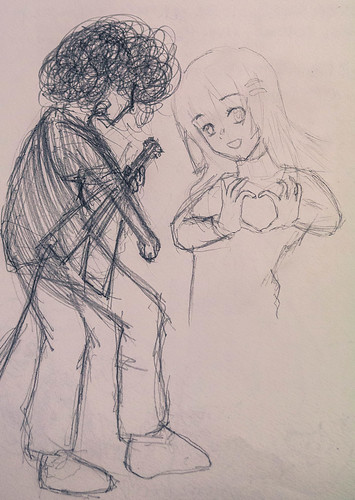
While you wait for the initial feeling of gee-whiz excitement and dizzy anemia to wear off, be sure to thumb through community sketch books filled with doodles and messages from past doners. Like trash blowing down the shoulder of the information superhighway, these journals last are the last scraps of organic communication in a digital age. Soon enough these spiral-bound pages will be replaced by drawing tablets prepped to instantly proliferate the illustrations across your choice of social media at the tap of a pen. Until then, you'll have to make do with our photographs.
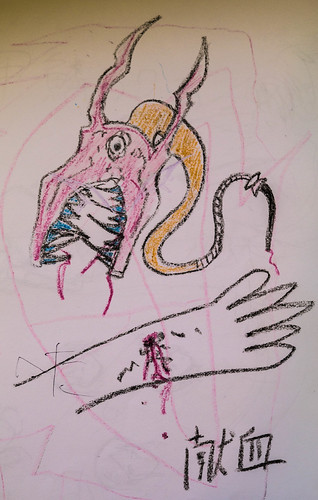
The fear of needles manifested as a Hakaijyu-looking monstrosity.
A safer and more hygienic forum to advertise to like-minded individuals than scribbling graffiti on bathroom walls.
Some also use it as a way to pimp their dojinshi circles. The blood banks overflow in the weeks leading up to Comiket.
Of course, certain artists would be better off selling their creations to private collectors.
All this piece of modern art is missing is the glass-paneled frame.
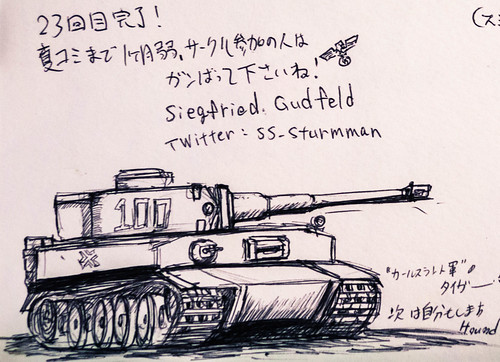
The only thing railway otaku love more than trains is the use of forced perspective.
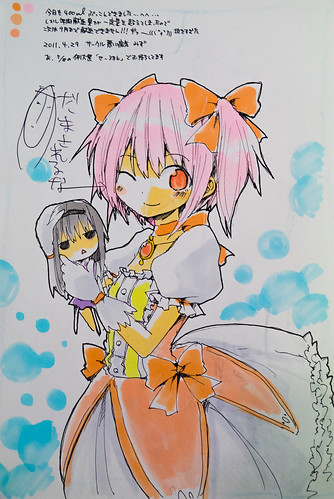
You have free access to my veins under the stipulation that you be an
amnesiac junior high school girl with an otherwise incurable disease.
And call me "Onii-San."
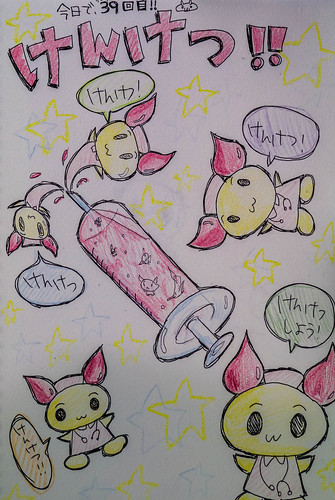
"Give me your blood!" The Ministry of Welfare mascot Kenketsu-Kun reveals his true intentions.
Pizza of Death fan art is always welcome.
Probably also from the artist above, known only as "Unko."
The magical sunset city beyond Kadath in the cold wastes. Check out those arabesques!
Throw in the kanji characters "献血" for "donate blood" and BAM, instant parody!
Kyun-Kyun Rock here is a fine example of collaborative works.
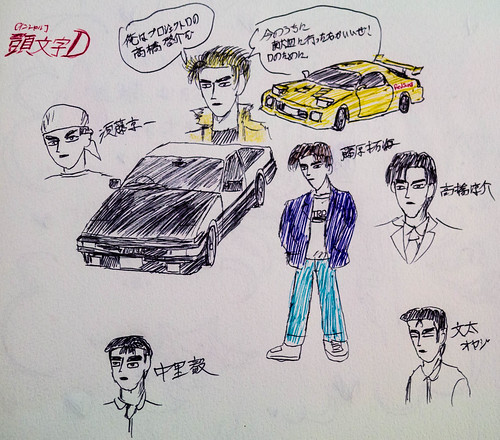
Proof that INITIAL D still has fans, somewhere, somehow.
Each Red Cross branch in Tokyo is customized to fit the color of its neighborhood. Kichijoji is an earth-tone hippie paradise. Shibuya offers hand massages for your sore metacarpals after a long day of carrying shopping bags. The new center in Shinjuku is lined with mannequins sporting concept fashion. Once you run out of gimmick restaurants and wacky Japan tourist traps, the only thrill left comes from sticking a needle in your arm. At least you know where these ones come from.
Somewhere along the way otaku culture has gotten mixed in with mainstream culture. This interlude in our History of Akihabara series steps out of Electric Town to explore otaku elements pervading Japanese youth culture as well as the lifestyle alternatives they provide.
Meet Yumemi Nemu, star of Denpa Gumi, the alternative idol unit for those who think that Momoiro Clover Z has gotten too mainstream. A Renaissance woman of sorts, when not behind the mic she moonlights as a DJ at the anisong club Mogra and models for gravure. I should also add that she doesn’t have a steady income, likely isn’t planning for the long term and may or may not be defaulting on her pension payments. But this isn’t intended as an attack on her free-wheeling ways. If anything, Nemu represents the growing number of young people searching for new lifestyles and values amidst the scrap of a broken employment system.
She’s a member of the so-called “Lost Generation,” a clumsy branding for those raised during the post-housing bubble double decade of economic deflation. These are the convenience clerk NEETs, the hikikkomori shut-ins, the drop-outs that felt their channels to mainstream society strangled by unforgiving educational elitism. Rather than put themselves back on the accepted path to success worn bare by their parents footsteps, they have continued on their outside vector towards unexplored venues of self-fulfillment.
Mainstream media is only now starting to acknowledge what youth of Japan have always known, deep down—that the old paradigm doesn’t work, that company life means no life at all, and that net culture can produce objects of real value.
Raised on low-fi fare like the Famicom without being spoiled by the high-rolling decadence of the bubble era, this generation isn’t afraid to spend the rest of their days working part time jobs so long as it means scraping up enough cash to pursue their hobbies and social activities. Some describe this worldview as 2.5D, which is exactly what it sounds like—the halfway point between 2D and 3D. It marks the intersection of fantasy space (anime, video games, the net) with real world space (art, gatherings, events).
Pink Sugar Heart Attack
For a visual example, look no further than the Neo Cosplay Collection.
Held at La Foret, Harajuku’s flagship clothing mall, the collection featured brands such as GALAXXXY who flip anime heroines into Punkey Brewster-style street wear. (Source)
If the crux of cosplay is to faithfully recreate the clothing of a character, then neo cosplay is concerned with adding to that look to make it your own. Imagine if an Akihabara maid went through the looking glass and emerged out of the closet of a Harajuku Fruits fashionista: The resulting spectacle would be enough to get anyone's pulse pounding.
Consider it the next step for pastel fairy kei fashion, augmented with otaku elements from Studio Pierrot’s magical girl shows like Creamy Mami. A natural fit, considering that the “sensational lovely” style pioneered by 6% Doki Doki drinks from the same carton of strawberry milk that fuels loli idol culture.
To paraphrase their homepage, the appeal of 6% Doki Doki comes from being blindsided by a flash of the extraordinary through the fog of the dreadfully ordinary. Entering the store you are transported to another world where Care Bears never stopped caring and purple becomes the natural compliment for pink. The shop girls are dressed like princesses from a parallel dimension. Brand maestro Masada Sebastian handpicks the heirs to his kawaii kingdom from a pool of over 200 applicants to preen into fashion models and performers for his avant garde stage shows.
Providing a reprieve from the everyday, producing young girls to serve as the brand image—6% Doki Doki shares its core concepts with amateur idol factories, the most productive being Akihabara’s Dear Stage.
Free Agents in the Game of Happiness
The interior of Dear Stage is intentionally lo-fi to create a home-made, school festival vibe. (Source)
Dear Stage is the mothership for the Moe Japan label captained by Tokyo University of the Arts graduate Fukushima Maiko. Her business model is 100% self-sufficient. Girls perform as idols on the first floor stage, play maid on the second floor cafe and flirt like hostesses in the low-lit upstairs bar—every male fantasy under one roof. And when a girl’s popularity hits critical mass, Fukushima is ready to produce and release their CD through her own record company, Meme Tokyo, a sub-label of Toy’s Factory.
While Fukushima’s girls aren’t going to steal the spotlight from AKB48 anytime soon, there are a handful of success stories amongst the hopefuls. And how does one even measure success? Each performer has their own personal dream to fulfill. Some want to top the charts, while others simply want a top-rated Nico Nico Douga account. They seem happy enough with whatever fame comes their way, so long as they can set the terms of said happiness.
The simple act of being active in a community you can call your own has become more important than the results of these actions. In her book, The Youth of Japan Are Not Unhappy (日本人の若者は不幸じゃない), Fukushima explains this phenomenon through the concept of “clusters.” Groups no longer need a centralized structure with designated leaders; rather, they can exist independently through a loose network of like-minded persons so long as there is a shared meeting place. These commons can be as expansive as Twitter or as pinpoint a venue as Dear Stage.
Clusters form around a concept or hobby. Take Hatsune Miku for example. Though technically owned by the developer, Crypton Future Media, all of the actual content, from artwork to music to choreography, is user generated. There’s no keystone holding the Miku architecture together. Famous artists may arise from the ranks, but they’re more of trend setters than visionary leaders.
Concentrated on the world wide web and spread across the globe, her legions of fans are simply waiting for their Field of Dreams moment: If you build it (or setup a concert), they will come. In droves, apparently. All 10,000 tickets to this year’s Miku Appreciation Festival sold out in a matter of hours. Most musicians would kill to have that devoted of a crowd, sans glowsticks.
The largest cluster of DIY youth culture is the self-published manga convention Comic Market, colloquially known as Comiket. Held bi-annually during the national summer and winter vacations, each incarnation draws over 500,000 visitors and 35,000 artist circles.
The convention hall has consistently been at full capacity for the past few years. (Source)
Comiket has a planning committee that screens applicants and ensures that everything runs smoothly, giving it the illusion of centralized management. In practice, their duties are more akin to crowd control than actual event planning. No, the true producers are the artists themselves. Their personal taste dictates what gets brought to the trade floor, each individual booth another link in the network. No single group can wholly represent Comiket, for this diversity is its defining characteristic.
Application fees are nominal and the event is free to the public. Ideally a circle would break even on the booth fee and printing costs. To some, a financial loss isn’t even an issue—having your work on display for others to see is worth the price of admission. Still others plan on turning a profit, with more popular artists able to pull in a living wage. The line between pro and amateur blurs. It’s hard to say which is more impressive: That mainstream manga artists supplement their income here, or that unsigned independents could possibly outsell them.
Like Dear Stage, Comiket provides alternatives—alternatives to white-collar work or blue-collar labor, and alternatives for socializing and personal expression. Sure, not every indie creator is going to make it big, but the possibility is there. This possibility is just the release needed by youth who have fallen off the fast track or feel suffocated by society. Perhaps the Lost Generation isn’t drifting as aimlessly as everyone thinks. Perhaps they’ve been heading towards their appropriate clusters this whole time.
Once enough of these clusters amass, they form autonomous bodies with clear goals. In 2008, high school student Fujishiro Uso gathered disparate art communities from cyberspace and transported them into physical gallery space. Creators from Pixiv, Nico Nico Douga, 2channel and beyond leveraged social networks like Mixi and Twitter to magnify the manifesto of a new creative movement christened Chaos Lounge. Otaku culture was fed up with being marginalized by the mainstream, and the time hds come to hijack the architecture of the Internet to spread the message.
Their canvas would be the very room housing their installation pieces. Their palette was not limited to colors, but absorbed existing art and found objects in creating barely coherent pastiches, collages of characters familiar enough to be from any given anime, while generic enough to elude recognition. Much like the moe-ification of Akihabara, this terraforming process gave the nomadic Chaos Lounge tribe temporary bases—a place to belong.
Looking back, what changes did their post-modernist cultural revolution spark, if any? They transformed a hotel room into a free-form art commune, participated in an art battle royale, and created clothing for an Ura-Harajuku select shop, not to mention hosted nearly a dozen of gallery events. But aside from the praise provided by fellow otaku artist Murakami Takashi, Chaos Lounge has faced sharp disapproval, and from their supposed in-group at that.
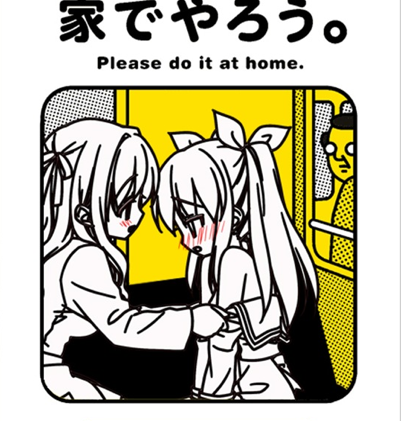
Otaku, acting as the self-appointed governing body of the Internet, are hyper-judgmental of everything, especially their fellow brothers-in-arms. Vocal critics trash Chaos Lounge for being derivative, while fundamentalists expound that the institutions of art and otakuism should be kept separate. Murakami was flamed by his peers for these same reasons. Despite the glut of incriminating Dinner with Waifu photo dumps on 2channel and yatte mita “Check me out” videos on Nico Nico Douga, otaku expect each other to follow the same code of ethics as the rest of the country. Namely, you’re free to be a huge weirdo if you want. Just do it at home.
These demotivational posters in the station send mixed messages posted when next to the "No groping" adverts. The Generation Gap and the Culture Gap
How can Chaos Lounge be fighting for otaku art but be hated by otaku? Why is Hatsune Miku considered to be fringe music despite scoring Oricon rankings and corporate sponsorship? If pornographic dojinshi moves more units than certain weekly serials, what’s keeping it off the Cool Japan menu?
There is a glaring breakdown of communication between the youth, otaku, and government. 2.5D helps put this into perspective by redefining the rules of engagement. Essentially, all parties are concerned with anime, manga, and the resulting media mix. They’re just operating within different spheres of interest.
Video games, light novels, online culture. For the current crop of digital natives raised on their parent’s comic collections, there is much less social resistance to these things than in the past. What many consider otaku culture is actually youth culture—and youth culture is mainstream culture.
Which isn’t to say that otaku culture, however you chose to define it, is dead. It still lives on, though there is a widening generation gap that starts somewhere between the mid 80’s and early 90’s. If you’re reading this blog, chances are you’re standing on the old man side of this divide with personal biases that don’t necessarily apply to those across the growing schism.
Ironically, as the classic image of the moe otaku gets pushed further into the background, more and more people are beginning to identify themselves as having a bit of an otaku streak. This doesn’t mean that they’ve broken down and bought body pillows, however. Online shopping and the media mystique of Akihabara have lowered the barriers of entry to fandom, making it easier than ever for anyone to pick up a high-grade sculpt of their favorite One Piece character or visit maid cafes unironically. Attitudes towards the label “otaku” have changed dramatically following Densha Otoko, elevating the hanging albatross into a self-depreciating badge of pride with a glint of sub-culture hipness.
One time Olympic athlete Narita Domu is proudly married to his snowboard and enjoys a more robust sex life than his average countryman.
This new breed of “light otaku” has been warmly accepted by business analysts and the tourist industry. A shrinking population means shrinking markets, unless you can find a way to convert new consumers to your product. Anime and manga manages precisely this with its comprehensive marketing blitz. Media mix casts a wide net of ancillary products guaranteed to snag a few fresh faces from the pool. Once you let yourself go with the flow, it’s only a matter of time before you find yourself purchasing some non-obtrusive character goods. After all, there’s not much difference between a moe blob and loosely-designed (though endearing) yuru-chara when they’re dangling from your cellphone.
With their mindless grins, local mascots make collecting useless baubles charming as opposed to a social faux pas. (Source)
Of course there’s more to being an otaku than mere consumerism. Following the success of Haruhi and Lucky Star, location hunting is back in a big way. Fans embark on seichi junrei, or pilgrimages to holy sites, to soak in the ambiance of the locales that inspired a title close to their heart. In the same way that Hatsune Miku concerts convert digital MP3s into a live listening experience, location hunting connects fictional settings with real world space. It’s the perfect motivator to get out from behind the computer screen and travel the country.
Between this, Tesujin-28 and marbled beef, Kobe has everything. (Source)
Accidentally showing up in an anime is the smartest PR move a city can make. Washinomiya shrine is the classic example—its visitors more than quadrupled after it appeared in the opening credits for Lucky Star. Capcom has organized a series of tie-ins featuring the locales and feudal battlegrounds from it's Basara series to make a pretty penny off reki-jyo, or female history buffs. The former Toyosato Elementary has since opened its doors (and vendor stalls) for K-On! groupies. Over the past few years Ueda City has organized summer festivals that coincide with the events of the Summer Wars movie. The otaku factor is free money for municipalities that are ready to capitalize on it.
The question, then, is what qualifies an otaku? The label means something different depending who you ask. The dictionary defines it as a person who is passionate and deeply knowledgeable in a specialized field. Culture critic Azuma Hiroki adds a post-modern twist by making them “database animals” in search of instant gratification. Gainax founder Okada Toshio holds them as a persecuted sub-sect who are the modern inheritors of Edo’s artisan culture. And psychologist Saito Tamaki deftly describes them as anyone able to get their jollies from nekkid cartoons.
On the one hand, this analysis comes off as an exercise in navel-gazing. And in a way it is, especially for those who consider being an otaku as part of their identity. But let’s not forget that anime and manga are serious business. A 2008 white paper produced by the focus group Media Create found that the combined sales of the otaku industry to be 186.8 billion yen (about 1.65 billion USD at the time), with nearly half of the sales from dojinshi.
The Economy Minister has his eyes set on Akihabara as a key to economic growth. Dentsu is primed to form an otaku think-tank to better market anime abroad. Cool Japan has evolved into Vibrant Japan, and if their sponsorship of AKB48 as the official face of the campaign is any indication, they’ve moved even further away from the pulse of what makes their country hip. They have otaku culture centered in their sights—except this makes them blind to youth culture, the lifeblood moving things forward.
If you’re interested in getting in on the ground floor to see Nemu-Chan and the other members of her unit in action, you don’t need to risk taking the plunge deep into Akihabara. Denpa Gumi is taking their act straight to Shibuya, the center of Japanese youth culture. And they’re not alone. Walpurgis Night, a Madoka Magica-themed DJ party, visited the city last June for an evening of anime song exuberance. Clusters like J-Geek are fighting to bring moe pop to the masses. To paraphrase an old otaku adage, "When there’s no room left in Akiba, the maids will walk Shibuya." With the appearance of the digital wonderland Maidreaming, it only seems like a matter of time before the prophecy is fulfilled. Honestly, the whole scene, from denpa to dojinshi to experimental art, is not my thing. But without anything constructive to add to the ongoing movement, my opinion is practically irrelevant. Whatever these crazy kids are up to seems to be going well enough without curmudgeons like me mucking it up.
Given the alternatives—either staying holed up in your own personal bubble or doing the responsible thing by grinding your life away for just above minimum wage—what they're doing is commendable, a faint beacon of hope for potential entrepreneurs that reaches beyond the otakusphere. The harsh realities facing Japan may not be so simple as to be flattened down to 2.5D, though this new perspective affords overlooked possibilities.
Notes and tidbits 2.5D
The entire concept of 2.5D discussed here was kick-started by its namesake company. 2.5D is a “Social television network,” meaning they regularly broadcast content over Ustream, a live feed service. Programming includes talk shows covering art, fashion, and music, as well as DJ events with a bent towards young creators and otaku culture. Shows are free over the internet, and for a modest fee, viewers can sit in on the recording at their studio located west of Shibuya.
Denpa-kei music
“Denpa” literally means electronic signal or radio waves, like the one from your TV set. While the genre’s heavy use of synth and voice modulation seems to make “Electronica” a fair translation, Denpa refers to a more sinister type of signal--the invasive kind that makes the receiver go insane.
In 1981, a truck driver hopped up on amphetamines went on a stabbing spree in Tokyo’s Koto ward, killing four (including two children) and wounding two others. He claimed that signals sent directly to his brain commanded him to perform the murders. Although his plea fell through and he received life in prison without parole, his claim, along with recent scientific discoveries suggesting that electro-magnetism could effect the human body, popularized such schizophrenic and delusional stories as denpa experiences.
Denpa conveniently replaced the taboo term “kichigai” for describing the mentally unstable and quickly became the lingua franca for the subculture scene. Rock group Kinniku Shojyotai released hits like Denpa BOOGIE and Mr. Delusion about people being manipulated by outside forces.
In terms of modern music, it refers to songs made purposefully unlistenable, off-kilter, or even just plain weird that draws in fans simply for the sheer out-there factor. Better put on your tin-foil hat before clicking on the links above.
Legality of Comiket
Despite the record-breaking success of Comiket, it and other dojin events have been skating on thin ice since their conception. Creating derivative works without explicit permission from the rights holder is clearly illegal, and as the handful of cases made by the publishers has established, indefensible in court. Dojin is only able to exist out of the benevolence of the original creator. So far, most authors have turned a blind eye to the issue for various reasons, thus allowing circles to thrive. This house of cards could soon collapse, however, depending on the direction things take in the current push by publishers for neighboring rights.
In brief, neighboring rights would allow publishers (and any entity involved in shaping or promoting the work) to effectively bypass the original author when making decisions regarding how the work should be represented. This includes launching an e-book version and, yes, pursuing legal action after pirates, including dojin artists. This has authors like Akamatsu Ken up in arms about what could be the first step towards wholesale seizure of creator’s rights by the publishers. More details here. And this is in addition to the looming specter of the TPP. Lost Generation and The Zero Generation
As mentioned earlier, the Lost Generation are described as the youth left in the economic lull caused by the housing market collapse in the early 90’s. They’ve since adopted the mysterious moniker, Zero Generation (ゼロ年代). Led by cultural critics such as Hayamizu Kenro and Hiroki Azuma (see Genron), they are attempting to make sense of country affluent enough to be comfortable, yet with an income gap wide enough to cause disparity. How much is soul-searching worth in a wealth-driven consumer paradise? The Zero generation are aware that their gilded cage is beginning to peel and they are busy looking for a way out.
The 2008 White Paper on the Otaku Industry This report broke down the market into 5 categories: DVD/CD, published content, games (consumer products +PC), character goods, and dojinshi. I have been unable to find a similarly detailed document published any more recently, though Oricon rankings and others show that sales continue to grow, especially for light novels, mobile games, and dojinshi. Denpa Otoko and the fall of Shibuya
In Denpa Otoko, a series of counterpoint essays, author Honda Toru trashes Densha Otoko for selling out and relinquishing his otaku habits for a set of Hermes tea cups and a warm bed. Honda refers to this exchange of physical goods for affection as “romance capitalism” and presents it as a conspiracy orchestrated by Dentsu and the mass media. The popular "pay to play" model is rotten to the core: Love for one’s 2-D waifu is the purest form of devotion, whether the sheeple realize it or not.
The cover is illustrated by Hanazawa Kengo of Boys on the Run and I am a Hero fame. All of his manga feature thirty-year underdogs, none so more prominently than his 2004 debut about unrequited virtual reality love, Ressentiment. In the not-too-distant-future, the young couples of Shibuya are replaced by otaku bachelors as Akihabara spreads its influence across the archipelago.
Shibuya's fate is then sealed with the 2008 visual novel CHAOS;HEAD. The clinically delusional cast flatten the city with a dementia-fueled earthquake brought about by the locales unique "gravitation error rate," which is pseudo-science for denpa.
Continuing from the demonization of otaku in Part 2, we now examine how the media swung the pendulum back in the other direction, changing the image of obsessed anime fans from creepy shut-in to that of the awkward-though-lovable kitsch of Akiba-kei. Increased interest in the city from both the public and politicians would bring about irreversible damage to the otaku’s fragile ecosystem, with tragic results.
The Roots of Akiba-Kei Moe businesses would soon evolve the sensitive cat ears and resilient maid uniform that allowed it to crawl out of the primordial soup and onto land. In 1998, the balmy atmosphere inside otaku megastore Gamers made it a hotbed of nerd activity which gave rise to Dejiko, a seemingly innocuous mascot that provided the DNA for ensuing moe blobs. Serving as a visual template, she made otaku values into a tangible medium that could directly penetrate the brain of the viewer. Dejiko gave moe a voice, albeit that of a mentally stunted 10 year old girl.
Maid uniforms, speech impediments, and ridiculous hair accessories become the grammar of Akihabara much in the same way that glam fashion, emaciated boys, and gravity defying hair served as the iconography for visual kei. If the average person didn’t understand the meaning of these fetishes, they could at least recognize that they represented a specific set of values or lifestyle. And even if you don’t agree with what a subculture stands for, with prolonged exposure it can get under your skin and cook you from the inside like a microwave.
The following year, Broccoli, Gamers’ parent company, went prime time at Tokyo Game Show with their Welcome to Pia Carrot maid cafe. Pia Carrot is a series of visual novels where you attempt to bed your coworkers at the eponymous cafe over summer break. Needless to say, the concept hit a sweet spot with fans, leading to Cafe do Cospa setting up shop in Akihabara soon after. More focused on cosplay than maids, it catered to an already established sect of otaku while failing to attract fresh acolytes, but did succeed in setting up the bedrock for the coming exodus.
Like having your own private Anna Miller's.
Subsequent ventures innovated in transforming the venue from a simple cafe to an entertainment experience. Mary’s opened in 2002 and brought with it the now cliche greeting, irasshaimasse goshujin-sama—“Welcome home, master.” In 2004, a business savvy former office lady launched @Home Cafe which employed tricks from cabaret clubs to ensnare casual customers as repeat clientele. The popular image of a maid cafe where you interact with the staff through games, pictures, and custom food decorations was imported directly from the back streets of Kabukicho. Akihabara was learning how to hustle.
A key part of hustling is opportunism. Entire buildings were filled overnight with maid cafes catering to various sub-sects. Pash Cafe Nagomi for little sisters, Cos-Cha with its legendary riots on school bathing suit day, St. Grace Court for nuns. It wasn’t long before the cafe market became flooded, with the runoff spilling over into more mundane aspects of life. Moesham was there to cut your hair as an indulgent alternative to QB House. Maids became a self perpetuating myth, the rule as opposed to the exception.
The next innovation came in 2005 with Maifoot and maid reflexology. Their relaxation menu serves up a full course of aroma therapy, hand, foot, and eye massages, but clients don’t visit expecting results. The girls have no qualifications save for a willingness to dress up in costumes and rub stinky otaku feet. Their ineffectual finger-work is actually part of the appeal.
Like a junior idol whose moves and vocals lack professional polish, everything about the maid scene is driven by a wabi-sabi love of awkward amateurishness. If there is any efficiency to be found in the industry, it would be its ability to tirelessly manufacture an innocently careless charm, a ripening cherry waiting to be popped.
The burgeoning moe market was too big to have been supported from entirely within Akihabara alone. As mentioned previously, iconography such as Dejiko helped soften the brains of non-otaku, which were then reformed by Densha Otoko in 2005.This Trojan Horse snuck otaku culture into homes across the country under the guise of an underdog love story. Its positive portrayal of the lonely otaku painted over the bleak image left by the Miyazaki murders some fifteen years ago.
Densha Otoko oozes sympathetic charm like a three-legged dog.
The show, which began as a book based on a dubious thread on 2-chan, was the tail end of a media mix hurricane that included a movie, a play, and several manga spin-offs. If Miyazaki demonized otaku, then Densha Otoko Hello Ktty-ized them. The otaku had become a mascot, and mascots exist to be exploited for big cash money.
Oiling the Hype Machine
Now that otaku were sterilized in the public eye, curious citizens felt safe enough to flock into Akihabara to see these strange flannel-clad, fanny-pack toting creatures in their natural habitat. Through a mixture of ironic curiosity and honest interest, outsiders found themselves frequenting the locales that until recently were banned as social taboos. And let’s be honest—who doesn’t like being waited on by young, cute girls? Otaku may not be a desirable social caste, but they have enough good ideas to warrant playing one for the weekend.
Ironically, this PR boost marked the beginning of the end for a “pure” Akihabara. The Japan National Tourism Organization has since prepackaged the city as a festival of cosplayers and street performers, punctuated by friendly maids and cheery storefronts—all elements that betray the introverted otaku personality and cramped back alley shops. This portrayal of modern day Akihabara is either a mirage, or an affront on your culture, depending on how much time you spend on 2-Chan. The media’s interference with post-Eva Akihabara is not unlike Western explorers who brought culture to lost tribes—invasive, profit-motivated, and destructive to the indigenous culture. When camera crews first barged on the scene looking for a scoop in 2003, you could count the number of maid cafes on one hand. Regardless, the setup was a producer’s dream. Weird guys and the girls who (at least pretend to) love them! Grown men unashamed to waste away in a childish fantasy! The more off-kilter and exploitative, the better.
Maid cafes became regular features on weekday variety shows, attracting weekend gawkers as a result. New stores opened to meet demand. The cottage industry had become a tourist industry, with increasingly fringe themes designed to edge out the competition and, more importantly, attract camera crews. What began as a secret base to sort out your loot in private was turning into the posh place to go to be seen.
If you were looking for your 15 minutes of fame, Akihabara was the place. Aspiring TV talent jumped on the bandwagon with otaku-inspired bits where they would play a nerd for laffs. Hozuna Yoshimi gained notoriety for staging demonstrations dressed as Gundam’s Char Aznable. TBS set up amateur comedian Ishihara Hiroyuki to give 2-Chan-esque responses to man on the street interviews. Likewise, the weekend pedestrian paradise began to attract attention hogs whose extreme performances turned Center Street into a no-man’s land.
The "real" Char Aznable has little love from fans of his namesake. (Source)
Otaku weren’t going to sit on the sidelines and watch their city be usurped by popular culture. On June 30th, 2007, over 500 people rallied for the Free Akihabara demonstration where protesters marched to anime songs and branded hard-line slogans reminiscent of the student riots from the 70’s. Send Yodobashi back to Shinjuku! Otaku revolt! Spirit of moe!
Photographs of the event through the lens of Danny Cho: (Link)
The demonstration was doomed from the start. A spectacle by its very nature, it could only draw further media attention and exploitation—exactly the opposite of what otaku wanted. If Neros fiddled while Rome burned, then the demonstration provided Akihabara with a full string orchestra.
The following March 30th saw a group of cosplayers open fire with air soft guns in the middle of the Sunday crowds while police watched on uselessly. The pedestrian paradise came under greater scrutiny on April 20th when self-proclaimed 22-year old idol Sawamoto Asuka was arrested for public indecency, but not before forming a feeding frenzy of literal flash photography.
Want to shake her hand at the next Comiket? You can start stalking at her official blog.
The Man Finally Steps In
All these problems came to a head in the June 8th 2008 Akihabara massacre, where 25 year old temp worker Kato Tomohiro drove a rental truck into the crowd before assaulting on-lookers on foot with a dagger, killing seven and injuring ten persons total. The assailant wasn’t an otaku, but a former honors student ground into the dirt by the hyper-competitive education system. He wasn’t driven to kill by violent anime and video games, but because of the humiliation he suffered at the hands of his parents and peers at his unstable job.
The perpetrator had no links to the culture there, so why Akihabara? If his mission was to “kill anybody, it didn’t matter who” as he later testified, then why not a someplace more densely populated, like the Shibuya scramble?
Morikawa postulates that he was drawn to Akihabara the same way the media and performers were. The city represented something bigger than itself. If you wanted to go out with a bang, the pedestrian pavilion was a star studded stage. Forget going postal in Nagatocho or other areas housing the politicians responsible for the pressure cooker education system and revolving door temp worker laws that fueled his suicide attempt two years earlier. No, Kato wanted to defile the holy land of those who had trolled him on online forums, consequences be damned.
Kato got his wish, which was shared by some otaku as well. The pedestrian paradise was closed for safety reasons, and Akiba fever cooled off with it. Eventually things had calmed down enough to warrant its reopening on January 23rd, 2010, and while the crowds are still there, the vitality has yet to return. Police crackdowns on street performers are partially to blame, as is the general mood of nostalgic malaise that hangs over the area. While netizens may post wistfully about the good old days, there are groups who would have otaku eradicated as an inconvenience to their livelihood.
In 2001, the Tokyo government enacted the Urban Development Guidelines for the Akihabara Area. The ordinance aimed to rebrand the city as the IT capital of Japan with the academic firepower and business strageum to engage developing markets in China and Korea, with the Akihabara Crossfield construction project as its base of command, and the Tsukuba Express as the convoy to transport scientists from Tsukuba’s multitudes of research facilities. The proposal set the site at none other than the old farmer’s market.
After the stations dumps them out the Electronic Town Exit, most tourists bypass the hyper-modern UDX office building in favor of Chuo Doori, unknowingly bypassing the Tokyo Anime Center. (Source) Its trio of high-rise behemoths included the 40-story mansion style apartment complex Tokyo Times Tower (completed September 2004), as well as Akihabara UDX (completed January 2006) and the Akihabara Daibiru Building (completed in March 2007), structures that, according to the official home page, are “expected to be a new focal point for the Akihabara district, holding areas for Industry-Academia collaboration, information networking, and attractions for visitors.”
While this may make great PR, they left out one important bullet point. “By producing Akihabara as the IT capital of Japan, we hope to wash away its otaku image and raise property value.”
The three Crossfield buildings all have something in common. They began their lives as construction projects fed to the Kajima Corporation by Tokyo Governor Ishihara Shintaro, two entities bonded by a checkered past of political scandals and open collusion. These ties were strengthened by a common enemy, the fly in the ointment that was bottlenecking sales.
Despite its proximity to the station, reasonable rent, and ample railway access, Tokyo Times Tower flopped. Polls revealed that all the amenities weren’t worth having to deal with otaku neighbors. In true Bond villain fashion, Ishihara responded though initiatives that simultaneously support otaku while undermining them in his plot to minimize their presence to maximize profits.
The governor may be cantankerous, but he’s no fool. He understands the value of anime as a cultural export and balances his love/hate relationship for the subject matter with policies that are pro-international and anti-domestic. The same man who enacted the reviled Bill 156, or Tokyo Manga Ban, is also the chairman and sponsor of the Tokyo International Anime Fair. Recently, however, his back-stabbing seems to have come home to roost.
At the end of 2010, the Comic 10 Society of major manga publishers threatened to boycott the 2011 Tokyo Anime Fair due to Ishihara’s involvement with Bill 156, a move which would have stripped the event of all legitimacy. Just when it seemed like the industry had pinned the governor into a corner, the 3/11 earthquake struck weeks before the event, giving the organizers a timely excuse to abort while saving face.
Once the cesium settled, everyone had the same question on their lips: Would publishers still be up in arms when the 2012 event rolls around, or even be in a position to turn their backs on it after the economic damage they suffered during the quake?
No, and no. The Comic 10 Society recently announced without so much a shred of their prior indignation that they are on board for next year's TAF. What their compliance entails for freedom of expression in the medium is yet to be seen. The only one who seems to have a clear endgame is Ishihara, and things are proceeding exactly to plan.
As the definition of “otaku” is muddled by the casual consumers drawn to the city through the media and government’s efforts, the hardcore are forced further underground along the dame vector. Old symbols of the city, from the Radio Hall to LaOx the Computer Kan, have recently been renovated and stripped of their history. Perhaps Akihabara has outlived its usefulness as a spawning bed for nerd culture.
But all is not lost. Even as news crews destroyed an intangible part of the city in their invasion, they took back with them the seeds of otaku culture to spread on the winds of media mix. Stay tuned for the next and final installment where we will explore the ongoing exchange of values between Akihabara and mainstream Japan, as well as what this implies for the future of the city.
The opening to our four part series on Akihabara revealed the city as a vibrant market driven by individual interests. Pre-war vendors tossed their fruit for vacuum tubes when radios hit, and the resulting home electronic market paved the way for consumer electronics. After the economy hiccuped, these in turn faltered to be supplemented by DIY computers and all its geeky friends. Part 2 seeks to answer the question: How did we go from microchips to moe? Morikawa Kaichiro is a researcher and lecturer at Japan’s top universities in the fields of design and architecture. He has published numerous works on otaku culture reflected through the lens of post modernism. Amongst these, his comprehensive look at the historic interplay between culture and personal space, Akihabara: The Birth of a Personapolis, was the inspiration for this series. We'll start off with Morikawa’s theories on the defining characteristics of otaku to help us better understand the connection between consumers of electronics and anime before exploring how the media falsified a negative image of the subculture and the resulting impact this had on society and Akihabara.
Morikawa explains the otaku mentality in terms of space. More specifically, the manner in which they attempt to control the space around them. As mentioned in Part 1, the first generation of true otaku were cultivated in their bedrooms. They filled their shelves with figures and manga, lined their walls with posters and gravure idols. The point wasn’t to merely fill space, but to populate it with carefully selected symbols that represent their personal taste.
Collecting was augmented with internalization—memorizing dialogue, raising pet theories, creating dojinshi fan-zines, and other activities that exerted influence over the shows they loved. Because the otaku self-image is defined by personal taste, restructuring elements of a show to match one’s preferences entails control over the very building blocks of one’s existence. In a sense, they were mining the moe database long before Azuma Hiroki made it a buzzword.
Simply put, preference defines the self. To master the object of your preferences is to master the self.
This innate desire to dominate and control the object of their desires is the missing link between anime and PC otaku. In the same way that dojinshi allow the artist authority over a character by dominating them with codified moe elements customized to their individual taste, a PC user (emphasis on personal) has complete control over the space within a machine, so long as they master the code.
Programming code itself is English-based, the language of “superior,” invasive Western culture. Rather than shut themselves off from or rebel against this outside force, otaku in the 80's instead embraced it by reappropriating items that fit their needs while jettisoning the rest, effectively neutralizing the attackers while turning their own weapons against them. Just as Japan has maintained indigenous Shinto beliefs while integrating modified versions of Buddhism and Christianity, otaku accepted foreign computer culture, subjugating the code to spit out images of anime girls.
The mysterious heroine of Zarth is on the run and only YOU can protect her. (Source)
The otaku’s terrifying ability to alter their environment and bend culture to their will was at first limited to their personal living space—their bedrooms. However, computer and dojinshi stores soon diffused throughout Akihabara like spores from a fungal bloom, thriving in poorly lit buildings and creeping into abandoned spaces where the warmth of home electronics still lingered. Over time this growth would spread to cover the entire city, a relentless invasive species that choked out the original inhabitants.
The city itself has become an extension of the otaku bedroom, Morikawa argues. Think back for a moment and imagine what it feels like to be in Akihabara:
With the walls and skyline filled, bishojo adverts spill over onto the floor to envelop visitors on all sides. (Source)
From the moment you step off the train, its obvious that something is off-kilter. Adverts featuring anime girls decorate the station like wall scrolls. Heroines from the latest light novel series smile up at you coqquetishly from ground murals. And no sooner do you exit through the Electric Town gate that you are accosted by off-key J-Pop from Sakura Gumi or some other third-string idol group. You look around in an attempt to orientate yourself, only to be assaulted by a dizzying panorama of rainbow-haired debutantes with interchangeable features, their over-sized eyes following your every movement like titan sentries.
This disorienting experience is not unlike stumbling into the lair of a hardcore otaku, shelves lined with moe figures and walls plastered with their favorite 2D pin-up girls or 3D idols attempting to be 2D. Wicked City Dojinshi
Take note that the shift from electronics to moe occurred organically. Everything resulted from fans who were in turn consumers of their own product. But don’t mistake this as a grass roots movement—it wasn’t a movement at all, merely persons acting independently towards the same unspoken goal like a spontaneous public-space project, a fan-made city.
There was no Akihabara Instrumentality Project, no corporate backers looking to capitalize on moe economics. No, that would come later, from opportunistic mass media vultures and the scheming Tokyo governor Ishihara.
Passionate as fans may be, exerting influence over real world space requires real world resources. Otaku goods were slowly gaining ground over home electronics out of economic necessity, but anime and computers had a built-in market cap. Things would eventually hit a wall unless they could find a way to reach out to a wider audience.
Otaku were a truly underground subculture throughout the 80’s, largely unknown by the public and ignored when noticed. This ambivalence was shattered by a sensational string of murder-kidnappings in 1989, where Saitama resident Miyazaki Tsutomu was given the death penalty for murdering and molesting the corpses of four young girls aged between four and seven.
The resulting media circus exposed Miyazaki as a tape collecting maniac, beaming into homes across the country images of piles of unwatched VHS cassettes stacked precariously to the ceiling of his dingy apartment. Miyazaki became the public’s first face-to-face encounter with what the news branded “otaku,” and the grim details of his crime and private life were damning.
His obsession with young girls, his catalogue of anime and violent films, his shut-in personality—all these elements came together in a perfect storm of negative publicity to cement the de facto image of otaku as pedophile bottom feeders who never ventured into the light of day, with anime guilty by association.
In 2005 it was revealed that many of the pornographic and lolita materials “discovered” in Miyazaki’s home were actually planted there by television crews to stir up ratings. Some theorize that it was all a setup by the media to attack the VHS market that was eating into their profits. More dubbed tapes and OVAs means that much lower ratings for the boob tube.
Regardless of the political motives for his branding, the results were the same. Sex, violence, and the resulting corruption of Japan’s youth became flashpoint issues.
Pornographic computer games, or ero-ge, were already a public secret at the time. Pixalated underage rape/marriage simulator 177 stood before the House of Representatives for indecency back in 1996, and while legislation did ban certain titles that caught the public’s ire, DIY PCs were too far under the radar to wave the gavel at. This all changed in 1991 when a Kyoto middle school student was caught red-handed in his attempt to shoplift the ero-ge Saori: House of Beautiful Girls.
The boy should have gotten off with a slap on the wrist and a father chaperoned trip to a soap land to set him straight. Instead, the incident made headlines for the game’s salacious content—not the uncensored naughty bits, for those were somewhat standard (and illegal, though ignored) at the time—but for the extreme scenario where a young girl is kidnapped and held against her will in a mansion where she experiences titillating visions of incest and scandalous teacher-student relations. Parents screamed for blood, driving a squad of pitchfork and torch-wielding police to search the home of the president of Fairy Tale, the game’s publisher, where he was arrested under charges for the distribution of indecent materials. The Ethics Organization of Computer Software, or EOCS, a sort of ESRB for PC games, was established the following year to ensure that the monster stayed dead.
With the first shot fired, politicians wasted no time in declaring open season on ero-ge. The Prefectural Ordinance of Juvenile Protection was revised to include computer games under the umbrella of “Harmful Books” (有害図書), the same classification that attempted to blackball Nagai Go and Tezuka back in the 70’s for their “shocking” sexual imagery. This was another in a long line of scandals that funneled power of expression from creators to bureaucrats and PTAs. In this sense it could be argued that the Miyazaki incident helped set the stage for the recently passed Tokyo Manga Ban—where would Ishihara’s soapbox have been if the public hadn’t been preened to loathe otaku?
On the Coattails of the Apocalypse
With the world turned against them, their only hope for salvation was from the community itself. One of the kings of otaku, director Anno Hideaki, was about to provide us with a martyr to die for the sins of anime, changing the way the world consumed and viewed nerd culture in the process.
Anno’s Neon Genesis Evangelion first aired from October 1995 to March 1996. It was one of the last adult-oriented anime broadcast in a prime time slot, though following the precedent set by classic titles such as Space Battleship Yamato and Mobile Suit Gundam, Eva wouldn’t hit its stride until midnight rebroadcasts. In fact, its abnormally high ratings were so impressive as to help create the current (and much maligned) model of late night anime.
Riding a wave of miasma released from the popped economic bubble and competing for ratings with ongoing coverage of the Aum Shinrikyo cult who perpetrated the Sarin gas attacks on the Tokyo subway earlier that year, Eva synchronized with the nihilistic zeitgeist and wormed it’s way into the hearts of a generation who, for the first time since the war, were uncertain about the future of their country.
A lack of communication in the so-called communication age, the coming Apocalypse made real, a potent cocktail of underage sex and wanton violence, totally sweet giant robots thrashing to classical music—whatever message was to be found in Eva, it resonated with the populace, and converted true believers into otaku neophytes.
The rebroadcast of Eva caused a literal Second Impact for otaku culture. Suddenly, media that had no business discussing anime was dedicating serious coverage to Evangelion. Gelget Shocking Center became the first of many radio programs to invite voice actors and producers into the studio to banter about the show.
Should the video go down, try searching for "ゲルゲットショッキングセンター" on Youtube.
Shinji became the cover boy for Studio Voice, a pop culture mag dedicated to the cutting edge of cool. Even the high class cinema journal Kinema Junpo wasn’t above providing critical discourse on the End of Evangelion films. When a dark horse property pulls in big bucks, people sit up and notice. Eva netted an estimated 30 billion yen, making it more than just a successful show. It was a cultural phenomenon whose resulting economic and cultural capital legitimized anime as a business and art form. For the time being, otaku had turned the tables, like the bullied kid in school who goes on to lord over his former tormentors as a successful CEO.
Despite its explosive success, Eva turned out to be a false prophet. While it made gobs of money and helped improve the public image of the otaku hobby, it wasn’t indicative of anime as a whole. Just because someone thought Rei was “totally hot for a cartoon chick” didn’t mean they were ready to leap head first into the moe quagmire that covered the medium.
And so the Eva bubble soon burst, taking the wind out of the anime industry’s sails along with any lingering hope of prime time broadcasts for original properties. This didn’t deter Akihabara. Its coffers were filled from the burgeoning character goods market, giving them a monopoly over the storefronts. The modern image of the city as an otaku holy land was taking form. “Moe” was gaining ground as a buzz word. All it needed now was a mascot, who we will introduce in the next installment.
Akihabara has grown into something larger than itself. Obscured in the modern myth of "Cool Japan," we've lost sight of its raw essence.
We can only see the city for its nerd culture and new technology. In truth, for the past hundred years the area has been driven by bold entrepreneurs sensitive to evolving market trends, with otaku goods being only the most recent in a long line of services. In this series I hope to provide a fresh perspective to bring the hype more in line with the actuality, and a renewed appreciation for Akihabara along with it.
Over the next 4 posts, we will delve into the history of Akihabara to discover the circumstances that enabled it to evolve from black market to electronic town, and from otaku Mecca to media cash cow and beyond. A majority of the information comes from Akiba Confidential and Learning from Akihabara: The Birth of a Personapolis, as well as personal research and observations made while living in central Tokyo.
In Part 1 we’ll look into the first developments of the area before it was even known as “Akihabara,” as well as set up the key pieces for the mid-90’s anime boom to later knock down in Part 2.
Humble Beginnings
The first important thing Akihabara did was burn down.
In 1869, a blaze tore through the land between Kanda and Ueno, reducing the settlements to a smoldering heap while creating a welcome windfall for the newly established Meiji government. Edo, rechristened as Tokyo the previous year, remained a densely populated tinderbox just waiting for stray sparks, arson, or hungry flames from neighboring districts to spread uncontrollably throughout the city. The bean counters decreed it more prudent to use the now barren area as a fire-proof doorstep than gamble with their resources in rebuilding a region that could literally backfire on them.
It wouldn’t stay a wasteland for long. The following year, the government erected a small Shinto shrine named Chinka-Sha, or “The Extinguisher Shine,” on the site of old Edo Castle as a ward against potential flames. Apparently this decree never made its way to the town folk, for citizens mistakenly assumed that the structure enshrined Akiba, a renowned fire-quelling deity. This misconception became fact as the land around the site picked up the nickname Akiba no Hara, or “The Land of Akiba.”
The modern history of Akihabara begins with it as Tokyo’s doormat, but fortunes would soon reverse. The area’s location on the Kanda River connected it to Tokyo Bay, making it a prime trading zone for international cargo. In 1890 the area was connected to Ueno via the Tohoku Main Line, which then further extended to Tokyo in 1925, opening the freight-exclusive station to public transport for the first time to drum up tourism as part of rebuilding projects following 1923's Great Kanto Earthqauke.
Somewhere along the way, a careless typo changed the neighborhood’s name from Akibahara (あきばはら) to Akihabara (あきはば ら)—a totally reasonable misreading of the original misnomer considering that the readings of Kanji for proper nouns are as arbitrary as the local dialects that muddle them.
Distributors, wholesalers, you name it—everyone canny enough to swindle extra scratch descended upon the area which, by 1935, was officially designated as a fruit and vegetable market. Meanwhile, lumber merchants and shippers began settling down in tenements along the river. The infrastructure brought in people and capital. The technology brought in the first otaku in the form of obsessive train enthusiasts.
Inside of freight shipping station circa 1945 (Source)
Electric railways were on the cutting edge, and with its myriad of major and minor stations, the Kanda ward served as the beating heart that all steel arteries ran from. Tetsudo Otoko, or Train Men as they would eventually come to be disregarded as, found solidarity when the Tokyo Transport Museum opened to great fanfare in 1936. With train mania at its zenith, none could have guessed that there were already proto-otaku among them, tilling the soil for the eventual seeds of moe as we’ll discuss in future installments. In 1936, the Transportation Museum was relocated from around Tokyo Station to a building refurbished after the Great Kanto Earthquake inside the recently defunct Manseibashi Station along the Kanda River. The exhibitions were again moved in 2007 to Saitama as the Railway Museum.
The Influence of International Conflict and Domestic Price Wars
The market shifted from vegetables to vacuum tubes the following year after the Sino-Japanese War broke out, diverting the country’s appetite from wholesale produce to wireless communication for military purposes. In the early 40s, bulk electronic parts became the product du jour and started to muscle the fruit stands out of business. Akihabara, a city-wide swap meet of raw electronic ingredients, kept the high-tech war machine fed. This taste for radios would last far after Japan’s defeat at the hands of Allied forces.
Following World War II, the country was decimated, ashamed, and impoverished. But life goes on, especially for those crafty enough to game the system. To a starving populace, rice was a precious commodity worth more than life itself. Even so, it was outclassed by the radio. Engineering students from the nearby Tokyo Denki Univeristy would saddle up their rucksacks and scour the markets for the best deals. If the going rate for a vacuum tube was 4 pounds (1 sho, or 1.8 liters), then a completed radio could go for as much as forty pounds! Not too shabby for a starving college student amongst an already starving population.
Luxury taxes in addition to a prohibitively expensive price point helped DIY radio culture flourish. (Source)
The black market gravy train wouldn’t go on for long. MacArthur and his boys at the GHQ brought down their boot heels on unregulated trade by outlawing open air vendors in 1949. Ostensibly, it was part of a larger infrastructure reform project to widen roads and regulate commerce. Pragmatically, it stripped the citizens of their right to assembly in a power play to stomp out any embers of Communism before they developed into an anti-American blaze.
Stall owners wouldn’t take this lying down. The Vendors Union lobbied the government, and the municipality of Tokyo and Japanese National Railways responded by providing merchants alternative land on Akihabara station grounds. Merchants skirted the ordinance by pooling their resources into building brick and mortar stores. Sato Musen, Ishimaru Denki and other major players started here, standing strong as huge conglomerates in comparison to the fly by night vendor stalls.
The seven story Radio Kaikan, or Radio Hall, would become the most successful and iconic of these. Completed in 1962, tracing trends through the stores it housed over the years reveals the history of the city like layers of sediment. For now, it dealt exclusively in electronics, though it would later serve as a barometer for the encroaching popularity of otaku goods.
Radio Kaikan as it opened for business in 1962. (Source)
These electronic retailers were now organized and ready to capitalize on the post-war economic miracle. Through the 60, radios, along with white goods such as washing machines and fridges, formed the holy trinity of home electronics. The public ironically referred to these products as Mikusa no Kamudakara, or the Three Sacred Treasures, a title normally reserved for the sword, pearl, and mirror from Shinto myth that serve as symbols for the emperor. These goods revolutionized people’s lives, only to further evolve in the next trifecta of color TVs, freezers, and stereos.
"Ishimaru Denki IS Akihabara"
The hope placed in electronics perfectly encapsulated people’s bright outlook for the future. This worship of electronics and technology empowered the current generation, only to gut the next. The dazzling future promised by the Space Age literally ran out of fuel throughout the duel oil shocks of the 70’s, allowing the vapid consumer reality of present environmental and social problems to overtake it.
Children who grew up with the lunar landing and Ultraman’s kaiju-busting Science Patrol were finding out the hard way that the final frontier was closer than they thought—Most likely behind a stifling office desk.
Their dreams dashed, youth were struck with a sense of loss and betrayal akin to the war-torn nation receiving the news that their Emperor was not, as they had been taught their entire lives, descended from the Gods. Post-war Japan was able to compensate for this loss by focusing on rebuilding the country and reaping the material spoils of industry. Children of the 70’s didn’t have this luxury—or rather, they had too much luxury.
Pampered and proud, father’s salary allowed them their own private bedrooms and the disposable income to fill this space with toys, games, and gadgets. True, the economic miracle had transformed Japan from purgatory to paradise in three short decades. But this financial freedom also allowed for extreme self-indulgence, and with it, the first generation of true otaku.
Fold up this notion and stick it in your pocket for later. As far as every one’s concerned at the moment, electronics could do no wrong.
Akihabara’s electronic market had accumulated enough momentum that even the dual oil shocks were mere bumps along the road toward total dominance. The true threat would come from domestic, not international factors. Businesses had forgotten a key component in their strategy to monopolize the home and consumer markets: Parking lots.
Yamada Denki, Sakuraya, Bic Camera, and other chain stores began cropping up in the suburbs, offering lower prices and a more family-friendly shopping experience. Papa would be allowed to drive his shiny new car and play head of the household for a day. Bargain-hunting Mama was always happy to pinch pennies even as salaries soared. As these sensible purchasing patterns diverted sales from the city to the suburbs, it created a consumer vacuum in Akihabara waiting to be filled.
From Family-Friendly to Otaku Paradise
My-Com map published by Sharp in October 1982 as part of their advertising campaign for the MZ-2000 (Source)
DIY computers, or My-Com, used this moment of weakness to get their foot in the door. In 1976, one year before Apple launched, NEC Bit Inn opened on the 7th floor of the Radio Kaikan where it served as the front-runner for the coming PC revolution. Major players like Sato Musen began carrying computer parts in 1982, and the subsequent emergence of games featuring lo-fi anime art drew a new breed of nerd into the fold.
The demographic was steadily shifting from families with children to young males toting backpacks, not unlike the previous generation of radio scavengers. Slowly but surely PC stores trickled down from the top floor of the Radio Hall, pushing electronic shops out the door. LaOX the Computer Kan launched in 1990 as a seven-story behemoth housing computers, consumer electronics, and cell phones.
Plaque that was once displayed at the historic site of NEC Bit-INN (Source)
By 1994, PC sales overtook home electronics, and the hotly anticipated midnight launch of Windows 95—a cultural event as much as a consumer one—hammered the final nail in the coffin of old Akiba.
Stage 1 of Akihabara’s transformation into the otaku holy land was complete. Granted, while hardcore PC users had strong otaku tendencies, not all otaku were into PCs. If the city was to increase its nerd population, it would have to lower its barriers of entry through goods with a high market penetration that also maintained enough fringe elements to nurture a robust subculture.
As it turns out, this was the one natural resource that Japan was wealthy in. Video games and manga provided the perfect building blocks to bridge the gap between micro processors and moe.
In 1994, an employee of the computer mega store Sofmap opened Tora no Ana, a used dojinshi shop out of a shoebox apartment, unaware that he was setting up a chain of events that would permanently warp the cityscape.
Japan experienced an anime revival of sorts between 1995 and 1997 with hits such as Neon Genesis Evangelion, Sakura Taisen, and Sailor Moon, creating demand for ancillary products that pushed this tiny shop to branch out into character goods, thus solidifying otaku paraphernalia as a viable market. Seemingly overnight, Tora no Ana went from a hole in the wall dojinshi bodega to a nationwide chain that currently commands twin seven floor flagship stores in the heart of Akihabara.
A certain otaku magnetism was drawing nerd culture to the city. Dojinshi compatriot K-Books expanded from their niche in Ikebukuro to help fill a growing demand. Osaka-based figure maker Kaiyodo had branched out to Shibuya and Kichijoji with varying levels of success, but also found themselves pulled to the neon capital in the east. Both would go on to setup shop in the Radio Hall during the late 90’s, pushing the last vestiges of electronic shops out the door.
The rout of home electronics was a long time coming and surprised no-one, but it begged the question: Why otaku? To understand how Akihabara went from being merely socially awkward to flying totally off the social radar, we need to explore the controlling nature of otaku, as well as the profound effect Evangelion had on the population.